Of the 13,500 objects kept in the Rahmi M. Koç Museum in Istanbul, located in a beautifully restored 19th century naval base, it is those linked to the history of sailing which have over time become the undisputed stars of this surprising private collection
by Bruno Cianci
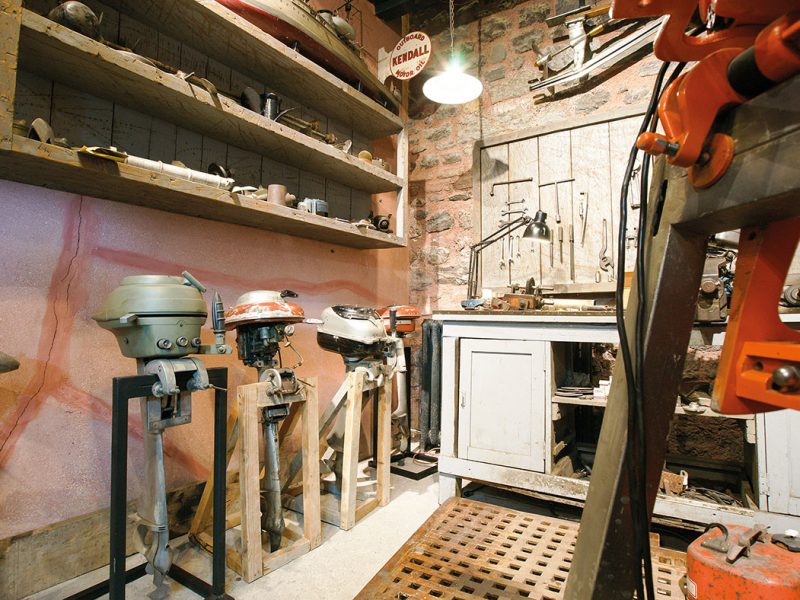
Although the most eye-catching of the marine objects in the Rahmi M. Koç Museum in Istanbul are the numerous boats that are on display, such as the submarine Uluçalireis, which at 94 metres is the largest piece of all, amongst the less flamboyant articles it is worth noting a collection of outboard engines that is so extensive that if it were lined up on the quay, with all the engines a metre apart, it would be longer than the submarine. And if they are viewed in the correct order, these interesting objects from the past clearly show the stylistic and mechanical evolution of these accessories which have made nautical history.
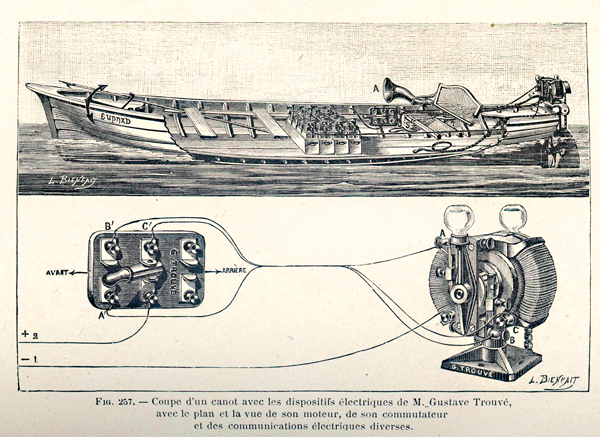
Not everybody knows that the first outboard engine was electric. It was created by a French gentleman called Gustave Trouvé (1839-1902) who fitted it onto a skiff on the Seine and perfected it between 1880 and 1881.
If we consider that the motors of the time were fitted with boilers and very heavy steam engines, which were dangerous and difficult to handle, Trouvé’s invention was unquestionably revolutionary.
Despite that, it didn’t take off in the way that could have been expected, for a series of reasons: for example, the accumulators were so heavy that they threatened the stability of the narrow boats on which Trouvé tried them out. Another factor, which should not be ignored, was the real difficulty of recharging the batteries. Although the first outboard petrol engine, built at the turn of the century, avoided a lot of these kind of problems, not even they were successful.
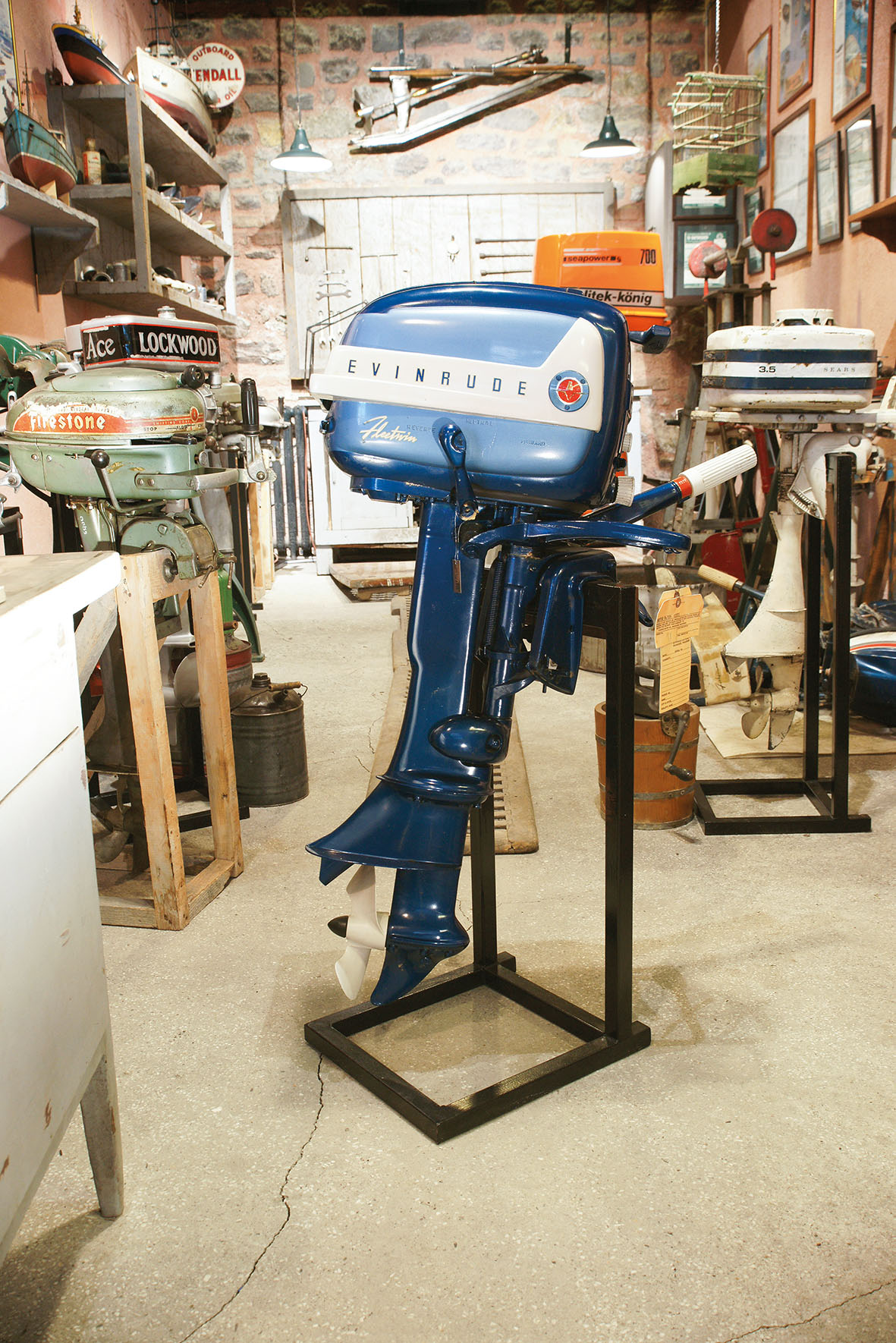
It was two businessmen who changed the course of history. The first was a Yale graduate, Cameron Waterman, who produced as many as 25,000 examples of the Porto-Motor between 1906 and 1914. The other pioneer from this sector was the mechanic with Norwegian origins, Ole Evinrude (1877-1934), who in 1907 founded Evinrude Motors in Milwaukee, along with his wife Bessie Cary, starting the production of the first successful models between 1.5 and 3 horsepower.
After selling the company, which called itself OMC (Outboard Marine Corporation), the couple in 1921 launched the Elto brand (Evinrude Light Twin Outboard), which eight years later merged with OMC and Lockwood to create the first big outboard engine industrial group.
The most celebrated Elto models were the Cub (producing 0.5 hp), the Pal (1.1 hp), the Ace (1.4 hp) and the legendary Super Elto, from 1928, the first two-stroke, four-cylinder used as an outboard. After the death of Ole, the group also bought Johnson Outboards of Terre Haute (Indiana), which was to survive until 2007, when the Canadian group Bombardier decided to concentrate on the Evinrude brand, although it still now continues to provide assistance and parts to Johnson clients.
In the 1930s other brands were created, including British Seagull (1931), which produced dependable single-cylinder, two-stroke engines, Mercury Marine (1939), which is nowadays part of the Brunswick group, and McCulloch, which is a colossus in the market for chainsaws and other motorised garden equipment.
Then there were the companies produced by the pairing of Cliff Scott and H. Bruce Atwater, the owners of Champion (1935-42), Firestone (1946-57), Scott-Atwater (1946-59), Corsair (1948-57) and Hiawatha (1956-59).
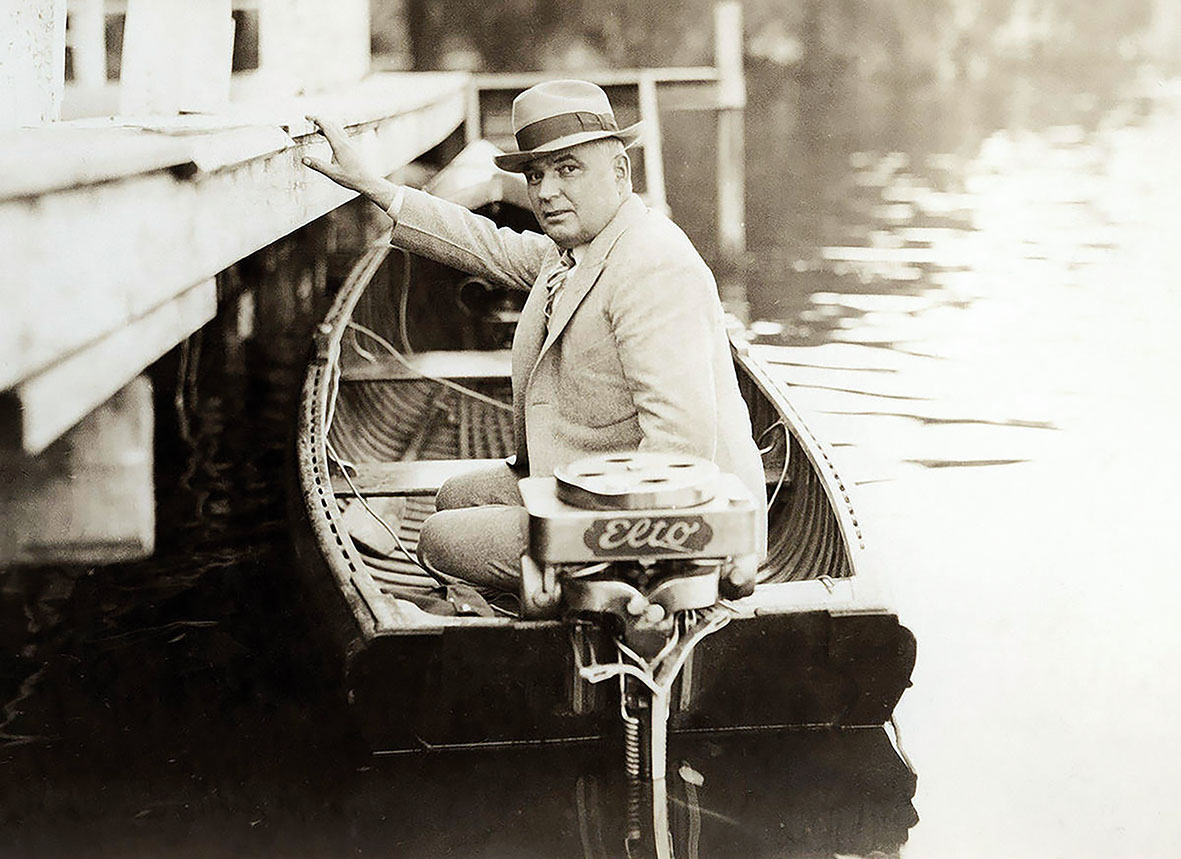
Ole Evinrude
In 1948, Selva Marine was founded and marketed its first outboard in 1963. The Italian company based in Tirano is still the only European manufacturer of outboard engines. In 1955 the outboard division of Japan’s Yamaha was launched. In 1962, Homelite started to produce four-stroke, 55 hp outboards, with Crosley engines, even though this kind of motor, which was much more reliable and quieter than a two-stroke, had been on the market in small amounts since the 1920s.
Not long afterwards the big Japanese brands arrived on the scene, with Suzuki and Honda leading the way. Honda produced its first four-stroke outboard in 1964, followed by Suzuki which, in 1965 launched its D55, a 98cc engine which produced 5.5 hp.
(Rahmi M. Koç Museum, Museum pieces. Outboards to love – Barchemagazine.com – August 2018)