The diversity of the objects and the motivations of the buyers are among the main factors of interest and challenge common to all collectors. As the close experience of three events held every two weeks between May and July shows, the collector’s car can be daring, sophisticated or Brazen
by Giovanni Gasparini*
The biennial GP Historique in Monaco in May and the Festival of Speed at Goodwood in July are the realm of the intrepid collector who is prepared to risk the safety of the car (and the driver) for the experience of speed, deafening noise and that pungent smell that permeates garages. Cars that were not designed for road use and therefore have very limited everyday use, with huge running costs, are now fetching millions and millions of euros, such as the glorious Ferrari 312 T4 driven by world champion Jody Scheckter, winner of Monza and Monaco in 1979, which sold for €7.6 million at RMSotheby’s in Monaco.
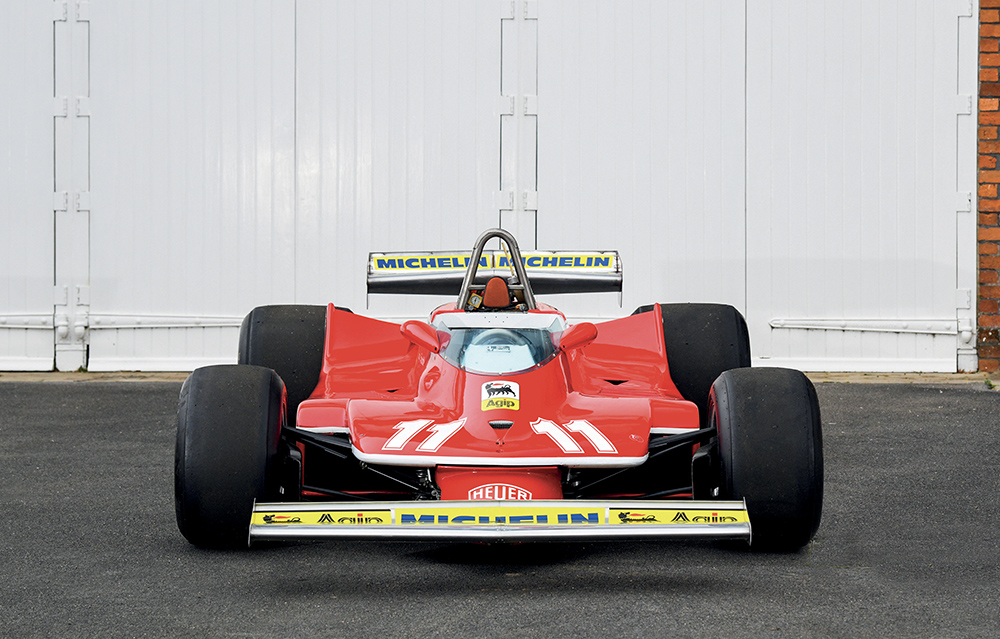
The glorious Ferrari 312 T4 driven by World Champion Jody Scheckter, winner at Monza and Monaco in 1979, which was sold at RMSotheby’s in Monaco for €7.6 million.
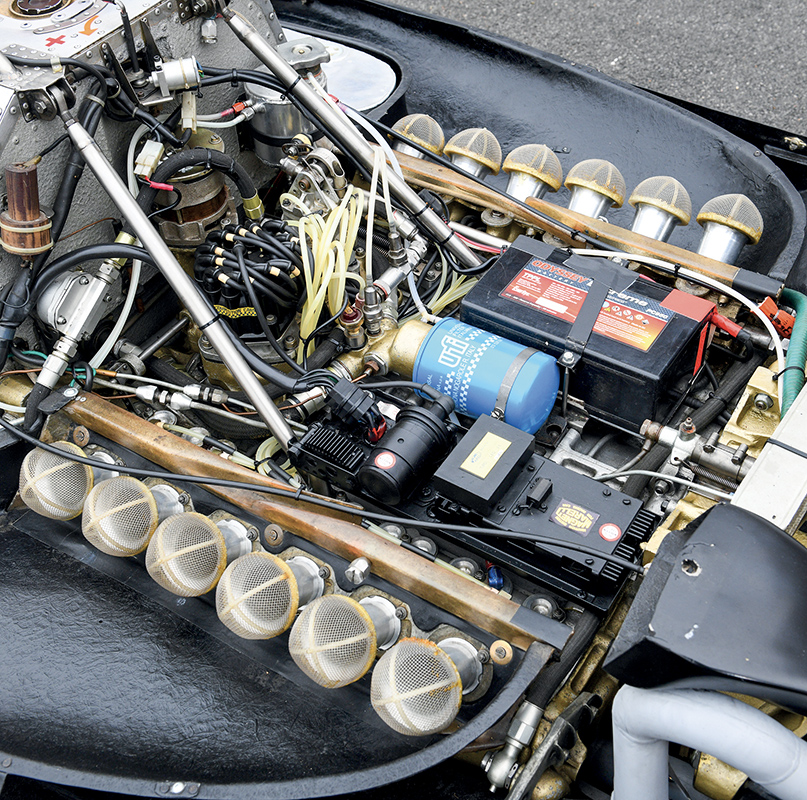
Of course, it takes a great deal of madness and futuristic passion to justify such purchases, but one should not underestimate the historical value of these racing cars, nor the idea of belonging to an exclusive club that inspires great admiration among the general public. With one important caveat: the authenticity and state of preservation of racing cars is particularly difficult to assess, and about 15 years ago even one of the most established auction houses fell victim to a scandal. The Mille Miglia’s success was based on an interim solution: road-going sports cars that could take part in both regular and two-seater races, so that laughter and tears could be shared within the same family.
The smell of oil and petrol gave way to the scent of fresh flowers and jewelled ladies for the Concorso d’Eleganza at Villa d’Este, which deliberately distances itself from the popularity of Formula 1 racing, so much so that it is held on the same weekend as the Monaco GP. From the overalls worn by the drivers and mechanics to the champagne and Panama hats worn by the judges, who are called upon to determine the winning car in terms of class, historical value and quality of restoration. It is a sophisticated form of collecting that has finally reached the other half of the world. The feeling is different, and the experience requires an appreciation of aesthetics and history, conveyed by sheet metal that becomes sculpture and Connolly leather worthy of film stars such as Rossellini and Bergman.
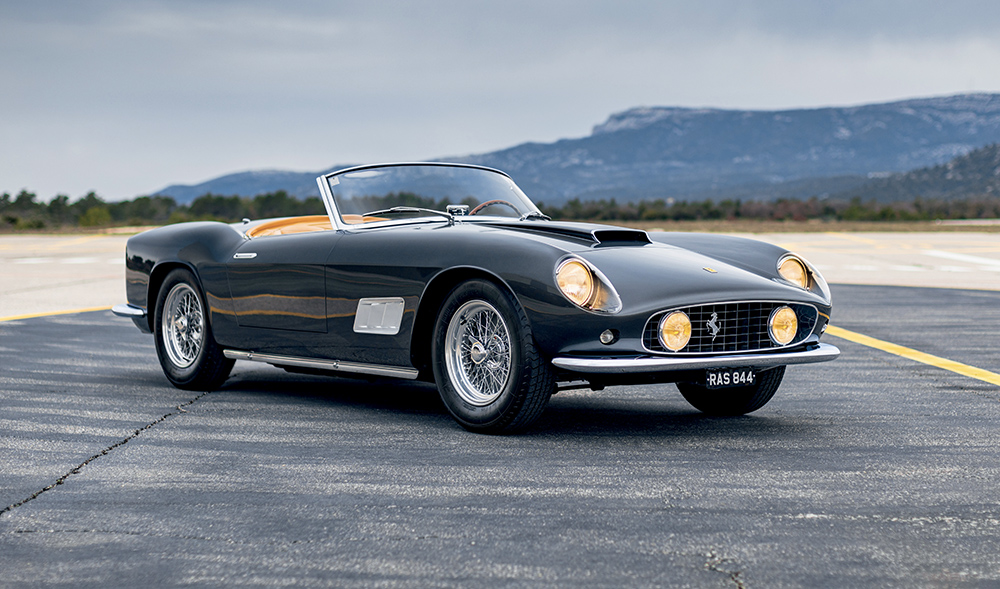
Ferrari 250 GT California Spyder.
While trends and speculation are inevitably destined to change and fade, new sports cars present a challenge to those who wonder about their long-term value.
It is no coincidence that one of the winning cars in 2023 was a Ferrari 250 California Spyder in a glorious metallic blue, shaped by the hands of the great coachbuilder Scaglietti. A 1958 model, one of 54 long wheelbase (LWB) cars built out of a total of just over 100, was sold at Artcurial in Munich for €5 million, while on the American market they regularly exceed $10 million, depending on the model and its state of preservation or restoration. From the elegance to the youthful exuberance of trainers and baseball caps, to the audacity of new super cars where fashion and speculation coexist, but also a return to the “handcrafted” builds of small manufacturers and designers. These realities coexist at Top Marques, Monaco’s “luxury” car show, where boorish hypercars (super is apparently not a cool enough word) with colours that can only be justified by the blindness of the buyers, and jeeps/assault vehicles inappropriately parked in front of schools rather than a theatre of war, stand alongside quality designs and productions from Dallara and Pagani.
Investing in the luxury cars?
While trends and speculation are inevitably destined to ebb and flow like luck at the roulette table, new sports cars pose a challenge to those wondering about their long-term value. Is the Porsche or Ferrari badge enough to guarantee the investment? The Prancing Horse has gone from a total of 50,000 cars produced between 1947 and 1989, the year after the founder’s death (31,000 of them in the decade 1980-89 alone), to 100,000 in 2002, thanks to the rebirth of the company under the leadership of Montezemolo, and 200,000 at the time of its 70th anniversary, which will be celebrated in style in 2017, an average of 2,850 cars per year. In 2023 alone, 13,600 cars were delivered, almost double the annual production of 10 years earlier… so how exclusive is a Ferrari today?
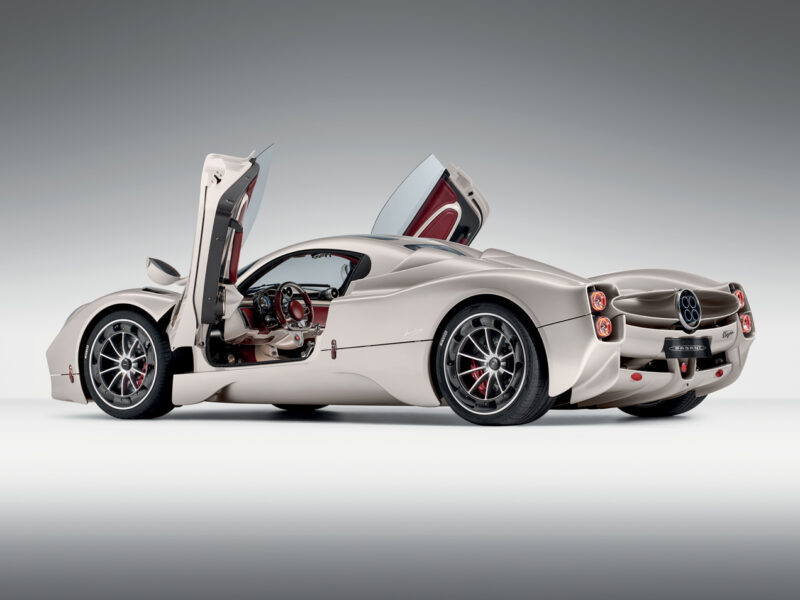
This drift towards “mass luxury” is countered by the claim of companies such as Pagani, which have remained faithful to a bespoke production method combining high technological content and craftsmanship, where the numbers are inevitably small, as in the case of fine watchmaking. The opposite fate is not surprising: on the one hand, the inevitable devaluation suffered as a used car due to the lack of rarity and the obsolescence of the models; on the other hand, the preservation of their value and the revaluation of millions of euros, as in the case of the Zonda and Huayra models that preceded the current Utopia: a name that augurs well for the future.
(Collecting – Intrepid or sophisticated – Barchemagazine.com – September 2024)