Ogni appassionato del mondo dei sigari è attratto anche dalle memorabilie del passato come Alain Proietto, titolare de La Casa del Habano di Lugano e del brand Cigar Must
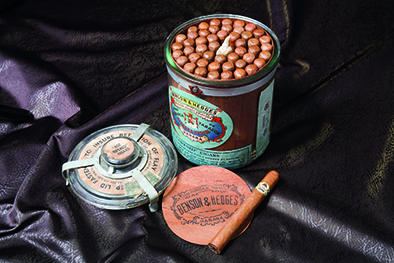
LE GIARE IN CERAMICA SONO APPARSE SUL MERCATO ALLA FINE DEL 18° SECOLO, ma una giara su tutte, la mitica “Talavera”, commissionata negli anni venti dalla Real Casa di Partagás, fece da precursore. Di questa giara, definita “un pezzo da museo”, furono prodotti solo mille esemplari, numerati sia alla base, sia all’interno del suo coperchio, così da rendere veramente unica questa produzione ed aprire la caccia per tutti i collezionisti di memorabilie cubane. Le decorazioni sulla Talavera, rigorosamente fatte a mano, sono semplici ed allo stesso tempo affascinanti, di colore azzurro/blu sul coperchio e sulla base e di colore azzurro/blu con sfondo bianco sulla parte centrale della giara. Inoltre, al suo interno, vi è una scritta “Fumando las penas van pasando y…. si fumas PARTAGAS nunca las tendras”. Successivamente, furono prodotte altre due giare nel periodo compreso tra il 1950 e il 1970, una commercializzata con la marca Partagás e l’altra con il brand di Ramón Allones, chiamata Sevilla Jars, in quanto prodotta nella fabbrica Pickman in Sevilla, Spagna. La differenza tra le due produzioni, sta nel fatto che le giare Talavera, sono state realizzate in soli mille pezzi numerati, mentre delle Sevilla, non essendo numerate, non se ne conoscono le quantità prodotte. Per un lungo periodo le giare in ceramica non vennero più realizzate, poi nel 1996, in occasione del 30° anno della fondazione della prestigiosa marca Cohiba, furono prodotte dalla fabbrica Bisadoa in Spagna, 1000 giare numerate sul fondo. Nel 1999, durante il Millennium Festival de la Habana, furono presentate tre nuove giare in ceramica, dedicate alle marche Cohiba, Montecristo e Cuaba, prodotte in 6.000 esemplari. Esistono anche delle giare in cristallo, meglio conosciute come “Glass Jar” o “Office Glass Jar”, la cui produzione era cessata negli anni ’70 / ’80 ed è ricominciata nel 2009. La nascita delle giare in cristallo si deve al brand H.Upmann e la prima risale agli inizi del 1900 e negli anni ‘40/’50 divengono di uso comune, poichè molti brand iniziarono ad utilizzare questo packaging per commercializzare i propri sigari. La marca a cui si possono ricondurre più produzioni è la H.Upmann, ma fino agli anni ’80 erano fabbricate anche dalla Hoyo de Monterrey e da Punch e fino agli anni ’60 dal brand La Corona e da Benson & Hedges. Tutte le giare della H.Upmann erano dotate di un nastro in cuoio, necessario per il trasporto, con impresso il nome del brand. I sigari erano custoditi all’interno di un box di cartone e inoltre sulla parte inferiore della giara era apposta un’etichetta di color rosso su cui veniva indicato al fumatore che “i sigari presenti all’interno delle giare rimanevano morbidi e freschi come se fumati a l’Havana”. Sull’ultima release dei Noellas immessi nel mercato nel 2009, era indicato che la produzione, di soli 5000 esemplari, era riservata alle Casa del Habano. Questo metodo di condizionamento dei sigari può essere paragonato all’invecchiamento del vino, in quanto il sigaro matura lentamente in un ambiente ben protetto dagli agenti esterni. Sono oggetti con un grande mercato collezionistico, sia con all’interno i sigari, sia vuote. Da Cigar Must è possibile ammirare molte delle giare fin qui descritte, per effettuare un vero e proprio viaggio nella storia di questo antico metodo di conservazione dei nostri amati puros.
Jars, what a love
Every enthusiast of the cigar world loves the memories of the past like Alain Proietto, owner of La Casa del Habano in Lugano and the Cigar Must brand
CERAMIC JARS APPEARED ON THE MARKET AT THE END OF THE 18TH CENTURY, but the legendary Talavera jar, commissioned in the twenties by the Real Casa di Partagás, was ground-breaking. Only a thousand pieces of this jar, defined “a museum piece” was produced, numbered at the base and inside the cover, making this production truly unique and kick-off treasure hunting for all collectors of Cuban memorabilia. The Talavera decorations are hand-painted, simple and fascinating, sky blue/blue on the lid and at the base and sky blue/blue with a white background on the central part of the jar. Moreover, this phrase appears inside the jar: “Fumando las penas van pasando y…. si fumas PARTAGAS nunca las tendras”. Subsequently, two other jars were produced between 1950 and 1970, one marketed with the Partagás brand and the other with the Ramon Allones brand, known as Sevilla Jars, being produced in the Pickman factory in Sevilla, Spain. The difference between the two productions is the fact that only one thousand numbered pieces of the Talavera jars were produced, while the number of Sevilla jars produced is unknown. For many years ceramic jars were no more produced, then in 1996, 1000 jars numbered at the base were produced by the Bisadoa factory for the 30th anniversary of the prestigious Cohiba brand. In 1999, during the Millennium Festival de la Habana, three new ceramic jars were presented, dedicated to the Cohiba, Montecristo and Cuaba brands, produced in 6000 specimens. Some crystal jars, better known as “Glass Jar” or “Office Glass Jar” were also produced, but stopped in the seventies/eighties and were reproduced in 2009. Crystal jars were made for the first time by the H.Upmann brand and the first dates back to the beginning of 1900 and became very popular in the ‘40/’50s, since many businesses began to use this packaging to market their cigars. The brand with the highest productions is H.Upmann, but Hoyo de Monterrey and Punch also produced them until the eighties and Benson & Hedges until the 1960’s. All H.Upmann jars had a leather strip suitable for transport, engraved with the name of the brand. The cigars were kept inside a cardboard box and a red label was also affixed at the base of the jar on which the smoker was informed that “cigars in this packing should remain soft and fresh as smoked in Havana”. The latest release by Noellas placed on the market in 2009, indicated that only 5,000 pieces, was reserved to the Casa del Habano. This method of conditioning cigars can be compared to wine ageing, as cigars mature slowly in a well-protected area from atmospheric agents. These objects are highly collectible with cigars inside or empty. Many of the jars described so far are displayed at Cigar Must, for a real trip through the history of this ancient preservation method reserved for the precious puros.
(Giugno 2016)