Mitico il suo carpaccio di gamberi rossi con amaranto, emulsione di frutto della passione, olio, yogurt e avocado
CUCINA MODERNA IN EVOLUZIONE, è la definizione più appropriata della filosofia culinaria di Claudio Sadler, chef di fama internazionale, riconosciuto dalle due Stelle Michelin. I suoi modi però, non dimenticano quelle che sono le radici gastronomiche regionali italiane. La cucina, come tutto ciò che appartiene allo sviluppo sociale, segna il tempo; la vita, le abitudini mutano e anch’essa con loro rinnovando idee e creatività. «Ho cucinato a bordo di qualche barca di amici – spiega Sadler – lo spazio è ridotto, nei piatti, equilibrio e presentazione. La spesa doveva tener conto di prodotti quasi del tutto edibili o cibi già pronti da versare in padella o pesci da cuocere interi, ancor meglio se filettati dal proprio fornitore di fiducia. A bordo, prediligo la freschezza, pesce crudo (carpacci e tartare) o paste semplici e gustose, pietanze non troppo elaborate per godere appieno il contesto naturale». Un piatto ad esempio con vino di accompagnamento: carpaccio di gamberi rossi con vinaigrette di frutto della passione e avocado abbinato ad un ottimo Fermentino sardo servito freschissimo.
Mythical is his red shrimp carpaccio with amaranth and emulsion of passion fruit, olive oil, yoghurt and avocado
MODERN CUISINE IN EVOLUTION is the most appropriate definition of the culinary philosophy of Claudio Sadler, internationally renowned chef acknowledged by two Michelin Stars. This philosophy, however, does not forget his regional Italian culinary roots. Cuisine, like everything in the social sphere, develops, marks our time, our everyday life and our habits and mutates with the renewal of ideas and creativity. «I’ve cooked on board some of the boats of my friends”, says Sadler, “Space is limited, in the dishes, equilibrium and presentation. You have to take account of almost completely already edible food products, ready to pour into the pan or fish to be cooked whole, even better if filleted by a trusted fishmonger. On board, I prefer fresh food, raw fish, a carpaccio or tartare, or simple and tasty pasta dishes, not too elaborate, to make the most of the natural environment». For example, a dish with wine accompaniment: red shrimp carpaccio with passion fruit vinaigrette and avocado combined with an excellent chilled Sardinian Fermentino.
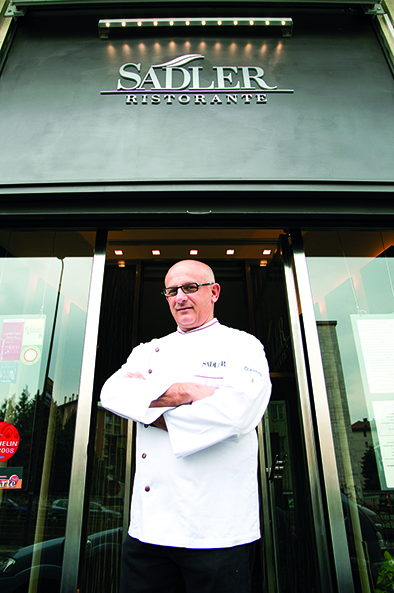
CLAUDIO SADLER
Classe 1956, inizia la sua carriera alla Locanda Vecchia di Pavia. Nel 1986 apre l’Osteria di Porta Cicca a Milano dove, nel 1991, viene premiato con la sua prima Stella Michelin. Nel 2002 riceve la seconda stella. Claudio Sadler è stato presidente dei ristoranti milanesi e, dal 2012, è presidente dell’associazione Le Soste. Altra grande conquista, è rappresentata dall’uscita di sei libri di ricette, editi dalla Giunti. Nel 2008 approda a Pechino in Piazza Tienanmen. Nel 2007 Claudio Sadler si trasferisce in via Ascanio Sforza 77. Nello stesso anno apre anche i due ristoranti all’interno del nuovo polo fieristico di Rho, Chic’n Quick, dove,anche chi non ha molto tempo, può gustare un pranzo ricercato in un vero ristorante.
Born in 1956, Sadler began his career at the restaurant ‘Locanda Vecchia Pavia’. In 1986 he opened the ‘Osteria di Porta Cicca’ in Milan, where, in 1991, he was awarded his first Michelin Star. Then, in 2002, he received his second star. He has been president of the association of Milanese restaurateurs and, since 2012, of the association of top international chefs named ‘Le Soste’. Another great achievement is the output of six recipe books, published by Giunti. In 2008, he landed a restaurant in Beijing, just off Tiananmen Square. In 2007, he moved to Via Ascanio Sforza 77 in Milan and, in the same year, also opened two ‘Chic’n Quick’ restaurants inside the new exhibition centre in Rho, Italy, where even those with little time can enjoy a refined lunch in a real restaurant.
(Ottobre 2015)