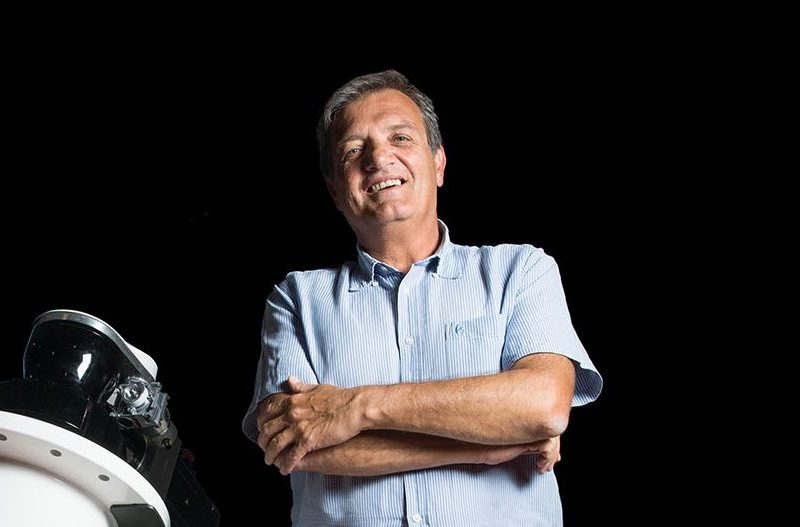
Cmc Marine is an industrial entity specialised in designing and producing stabilising systems, steering gears and bow thrusters for yachts and passenger ships longer than 16 metres
by Francesco Popia – photo by Andrea Muscatello
In 2008, the engineer Alessandro Cappiello, with remarkable insight, decided to pull the rudder and turn towards a new market in which he had great faith, as opposed to the prevailing sceptics who were expecting aftershocks of the financial crisis.
The captain in charge of the new course lead Cmc towards electrically-controlled stabilisation with fins and thrusters which he presented the same year at the Genoa boat show: this “change of route” marked a turning point for the company, perhaps its effective birth. The first shipyard to adopt them was Sanlorenzo with a 82’, followed by Benetti with a 32 meters and immediately afterwards also Azimut Yachts with the first applications: the move from oil hydraulic stabilisers and thrusters to an electrical system was lightning-fast, to the extent that in 2011 the production of oil hydraulic systems was limited to one single unit. 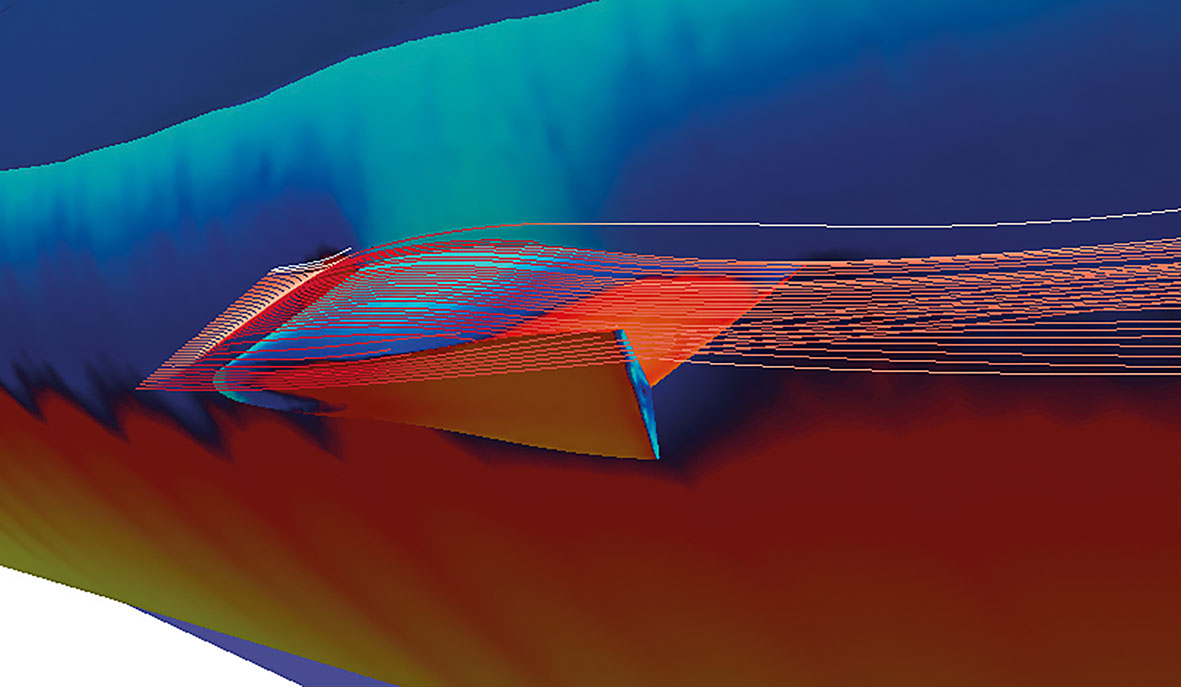
In the heart of the financial crisis, instead of opening its emergency parachute, Cmc Marine unfolded its wings and soared to new heights.
The SE system (Stabilis Electra, protected by patent no. 2172394 in 2012) uses brushless engine technology which allows excellent regulation and saves space. The power of the systems increases from 7 to 40 kW soon to be installed. For some time the 55 metre Admiral has sailed with each blade measuring 4.5 m2, 22 kW power, and most importantly, torque of up to 50,000 Nm that provides the necessary impulse to guarantee an effective straightening force even if the boat is at anchor.
When the boat is sailing, lift to the fin is provided by the flow deriving from the boat’s speed; when the boat is moored, with no speed, flow must be created by the rapid movement of the fin and this action requires great torque.
The components of the system are high quality and optimised for the specific use: Bitterstein reducers have a different configuration from the one generally available on sale as they are optimised to increase torque. The quality of materials is a crucial aspect, especially if one considers the use of these systems both on moving boats and on moored boats.
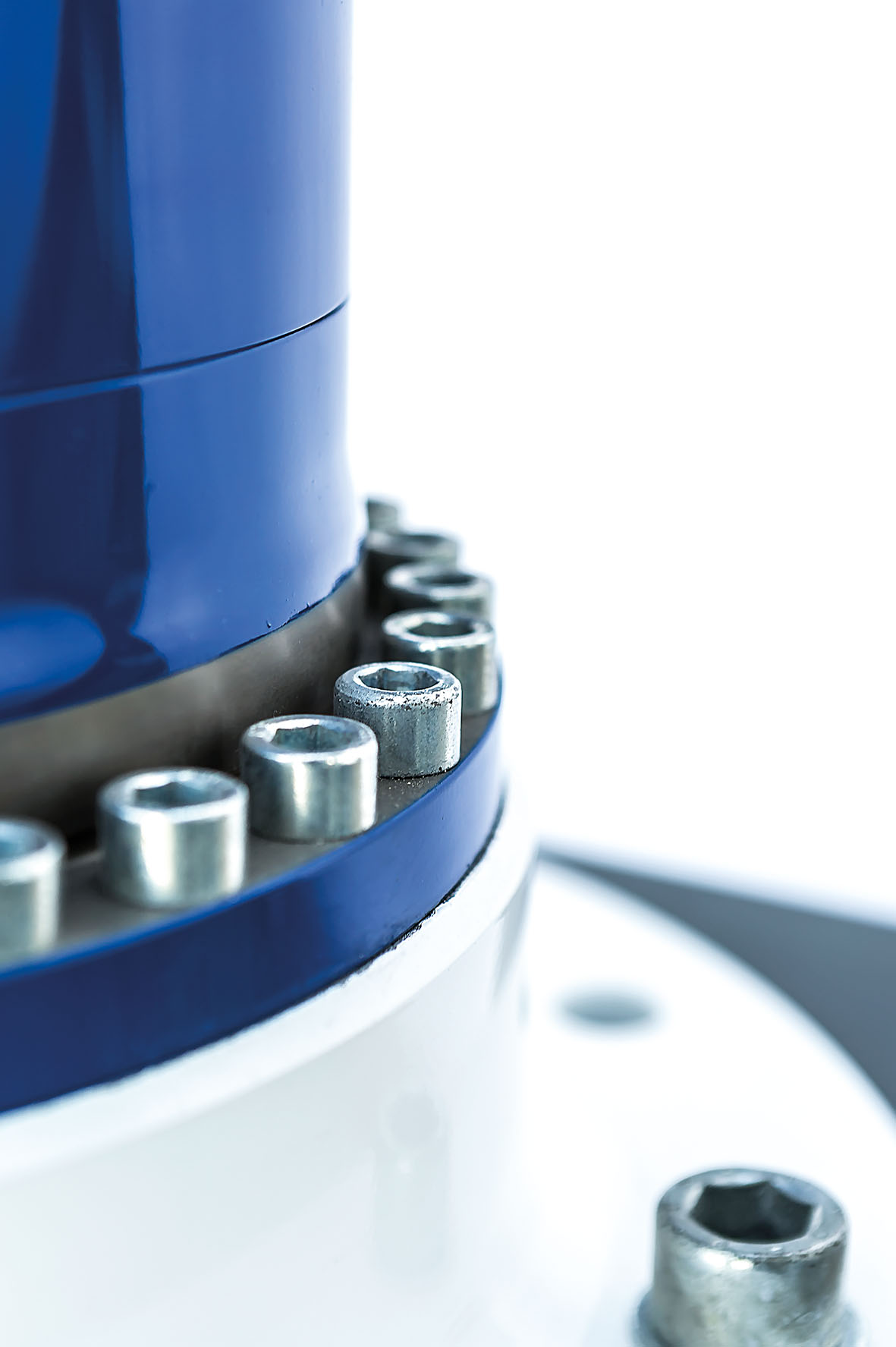 Contradicting elements have to coexist, in other words the velocity of the blade and the need to suddenly move large volumes of water: one has to combine the kinetic component, with speeds that can reach up to 80o per second, and inertia, with the need to move large volumes of water and thus adopt blades with little compensation. Cmc Marine approach is to find a balanced result that is necessarily a compromise between both characteristics.
But the process of optimisation of the Cmc Marine company goes well beyond, reaching the heart of the system: the control software, the mind, or the algorithm that on the basis of the input, the inertia data of the boat’s movement, produces as output the movements, speed and acceleration the fins must have. The software they have developed, protected by industrial patent
no 266917 in 2013, is called Dia-log, and was designed to be simple and robust.
Optimisation of the components, management and control by means of proprietary software with its philosophy of use, has led to systems whose volume is 1/3 of their predecessors, characterised by the simplicity of their installation, ease of management thanks to immediate integration and virtually no need for maintenance.
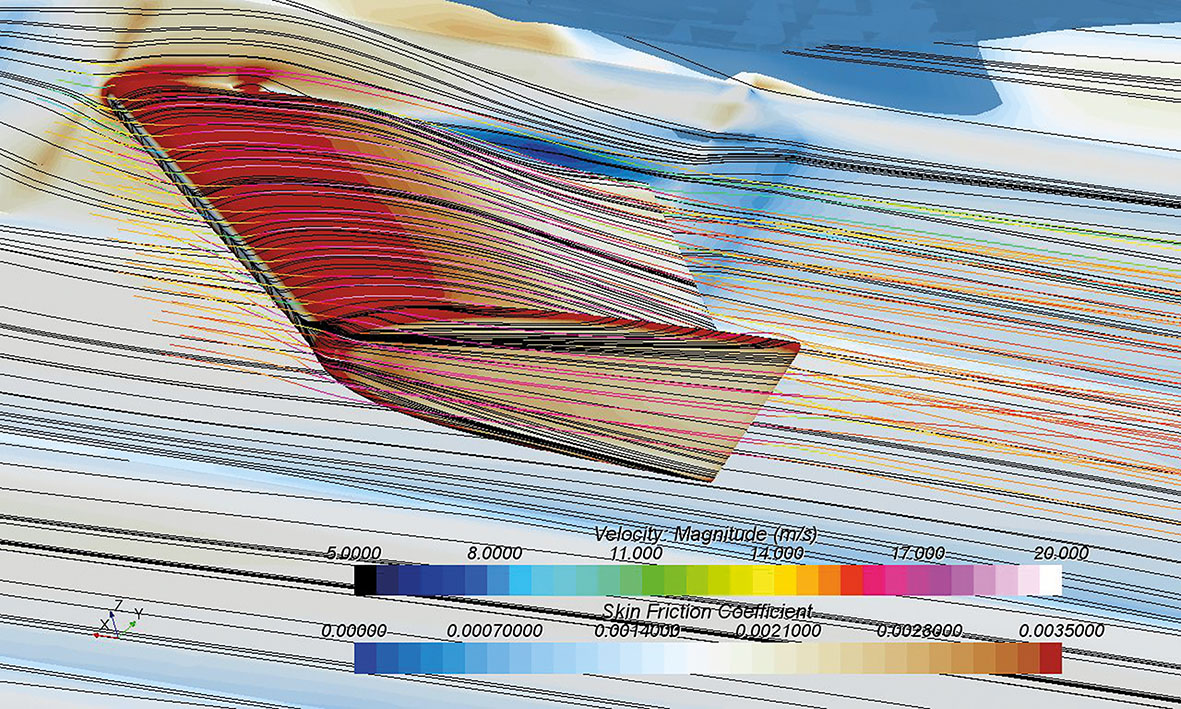
Looking at data from last February, a system installed 5 years ago has clocked up 10,200 hours of functioning at anchor, 4,800 sailing and 800 idling with the following result: no instances of malfunctioning, no maintenance. The development of systems aimed at planing hulls is also interesting, generally with shorter periods of rolling compared to displacement hulls.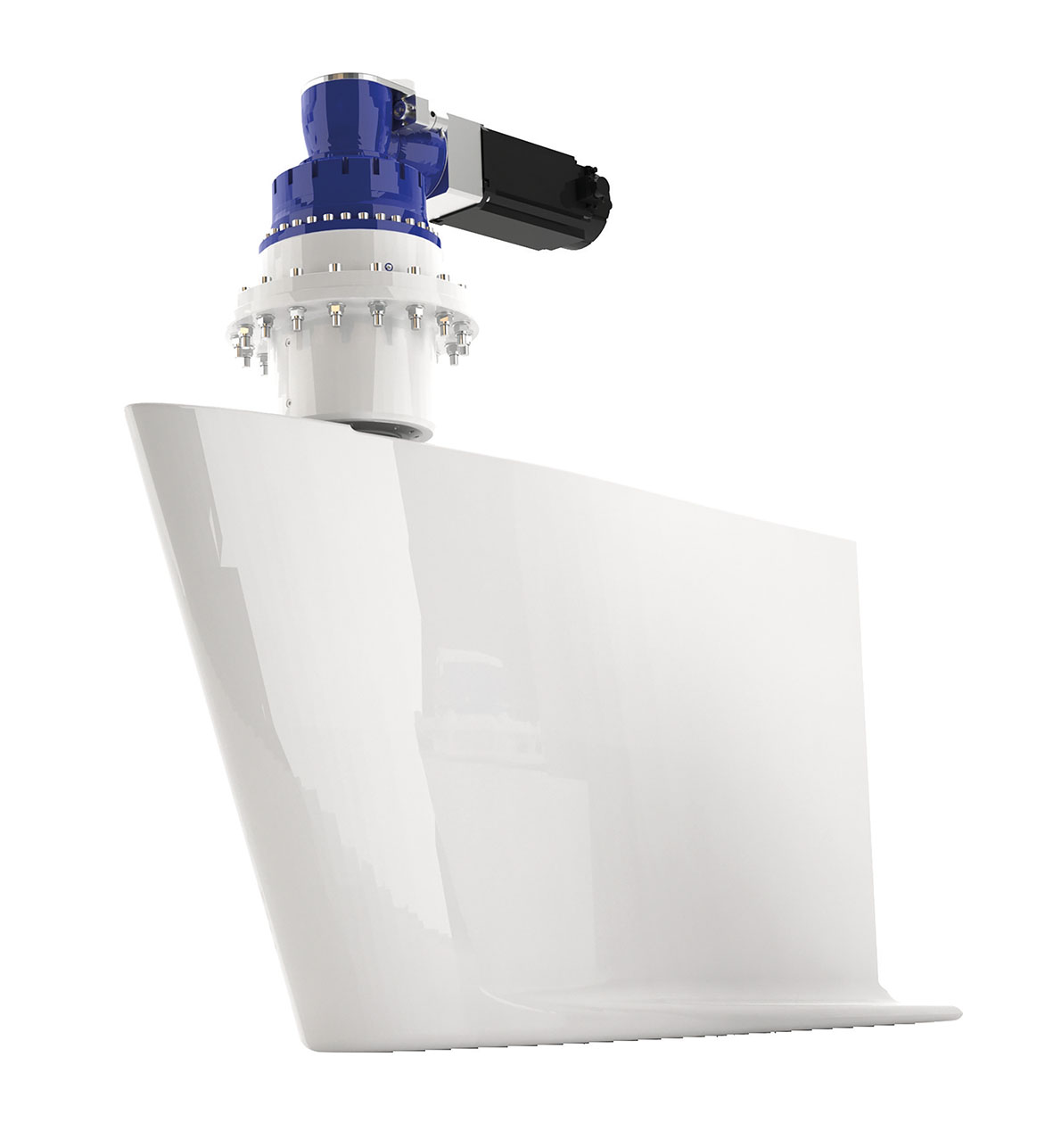
So they have different requirements, different characteristics: this leads to modified actuators, different profiles for the fins, and electronics capable of different controls. In order to meet different requirements, Cmc Marine has various systems to offer: the HS (High Speed), the LR (Long Range) and the SH (Short Range) according to the type of boat on which the systems will be installed.
The HS is aimed at planing boats. It has longer blades with little compensation to optimise their functioning at zero speed.
The LR and HS systems are fitted with Mitsubishi engines with servo drive sourced from industrial automation, so their components have been run in by thousands and thousands of hours of use.
The SR is aimed at boats between 50 and 80 feet long, and is fitted with a customised engines with a more commercial inverter and components in order to keep costs down to a level more fitting to the size of the boat. Furthermore, this system uses a single actuator with the possibility of fitting different types of blade.
The HS, owing to the greater breadth of the range, has SE (Stabilis Electra) stabilisers of types 40, 60, 80, 120, 160, 200 and, in future, 250.
 The LR system uses the same motor as the HS but uses different, smaller, actuators with planetary gearing: even though their diameter is larger in order to deliver greater torque, their height is significantly smaller with thinner blades because of the lower stress of bending movements. The two lengthwise sides are interesting: as well as being a clear delimitation of the upper and under sides of the blade, they form a sort of mechanical spoon that moves a greater volume of water, a very useful feature when the boat is moored.
Comfort also means silence and Cmc Marine has added transformers to its systems so that the blades can function both at 220 V and 24 V, so that they can work even when the generators are not in operation, using accumulators that are on board, even though only for limited periods of time.
The visit to the company was very interesting, and we were able to experience for ourselves how the systems are designed and made.
Starting from the brains, the technical office, with 8 mechanical and electronic specialists, 3 of which focussing on customer service for a direct contact with the client. When needed, other consultants are called upon, especially for analysis using CFD software during the design phase. The warehouse is supremely functional, in part thanks to automated shelving that supplies the required component simply by inserting the relevant part number.
Everything is made internally, except for the laminating of the fins which is entrusted to a third party working to Cmc Marine specifications.
The testing bench of the fins and the thrusters is an important part of the workshop, with braking systems to check torque and power: about 150 complete stabilisation units a year are produced each year. It doesn’t stop here. Cmc is indeed looking to the future working on the integration of several stabilisation systems such as the combined use of fins and intruders managed by the same control platform or the use of blades whose shafts are not vertical but inclined as required, making use of the vertical component of the blade’s lift.