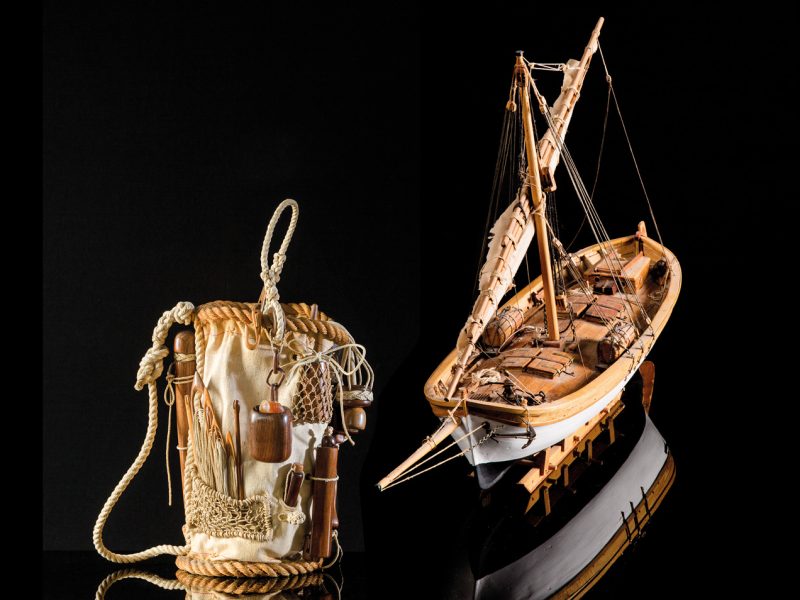
An original publication with two books in one. In the purple part, you enter the world of knots and marlin spikes, and in the London grey part, the world of knives
by Ornella D’Alessio
Massimo Poggi, a man of the world, an architect, but above all a great lover of the sea, was born at a time of transition, almost too rapid, between the traditional seafaring universe and the modern one, linked to the advent of new materials. Since childhood, he forged a sincere relationship – well beyond technique and competition – with the element of water, thanks to his grandfather, Olympic champion Massimo Poggi (with whom he shares his name), and his trusted sailor, Batti from Portofino, who was Massimo junior’s mentor and taught him to read the sea, to respect it, and to become a part of it. His grandfather, who was part of the crew of Italia – the Olympic racing boat that won the gold medal in Berlin in 1936 – and later participated in the 1948 and 1952 Olympics, receiving unbelievable recognitions, is the person to whom Poggi dedicates his book: Mariners’ Knife Seafaring, cultura marinara (Tormena). An original publication, just as original as they are – grandfather and grandson – in two languages, composed of two books in one. In the purple section, you enter the world of knots and marlin spikes, while in the London grey one, you explore the world of knives.
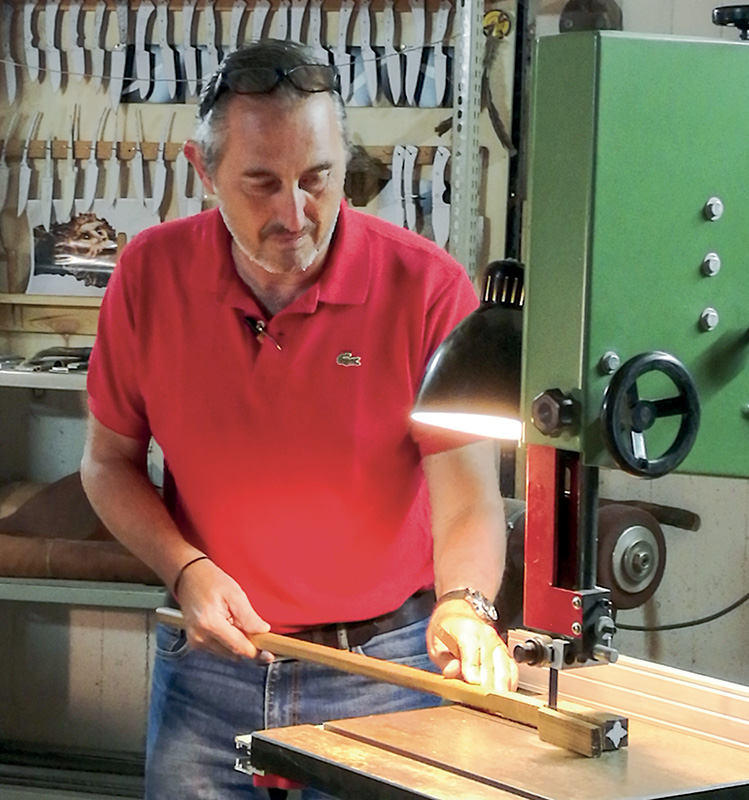
Massimo Poggi is the grandson of the Olympic sailing champion
of the same name. He became involved in the world of sailing
by experiencing the late 20th-century seafaring through his family sailor, “il Batti”, and by personally realising works related
to knot-tying and seafaring equipment.
It is an elegant and loving publication dedicated to his ancestor, to the art of seafaring in its highest expressions, but also to the extreme simplicity of knots without which nothing would be possible. Poggi defines these knots as “masterpieces of form and function”, the result of years of experience and practical needs, tools, buckets, and knives. “There are three elements that make up the pillars of the history of seafaring and of my personal history. Hemp: for sails and lines; wood: for the hulls, the masts, and the equipment; metal: for the first nails, the first hooks, the anchors, the battering rams, and then the screws, the pulleys, the heads of the harpoons, the needles of the compasses. Minute objects and, ultimately, entire hulls”, Poggi writes.
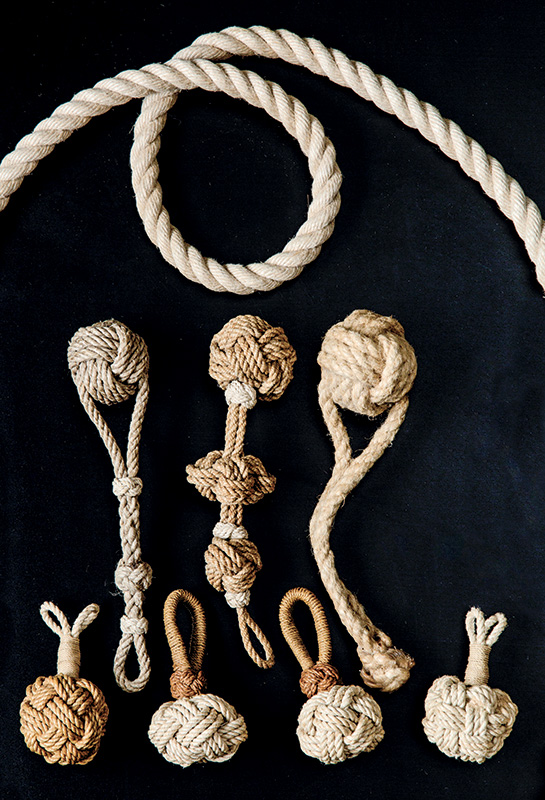
«This book aims to witness to that world, now disappeared, which only a few of my contemporaries had the chance to know. This is how the idea was born to evoke that ancient world through even the simplest of objects: from the natural ropes that run through tackles and blocks or are shaped into functional, sturdy knots, to the knife and the ever-present marlin spike that a good sailor always kept with him». Massimo Poggi
With hemp, he learned to tie knots from a very young age, and with wood, he learned to carve the first tools, to sew nets and to rig the gozzo (a traditional Ligurian boat). And then, over the years, he created true masterpieces, interweaving natural fibres and giving life to rugs, baskets, a reproduction of the Lantern of Genoa… Then, he moved on to wood, with lamps, frames, stools, marlin spikes, needles for sewing fishing nets, and then leather, scabbards and buckets to carry tools for sails and nets.
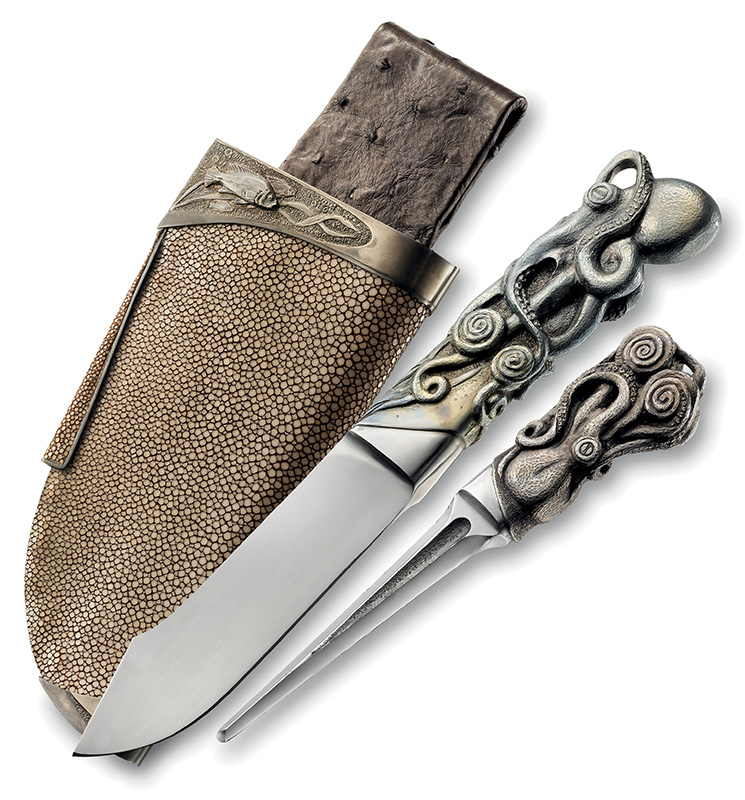
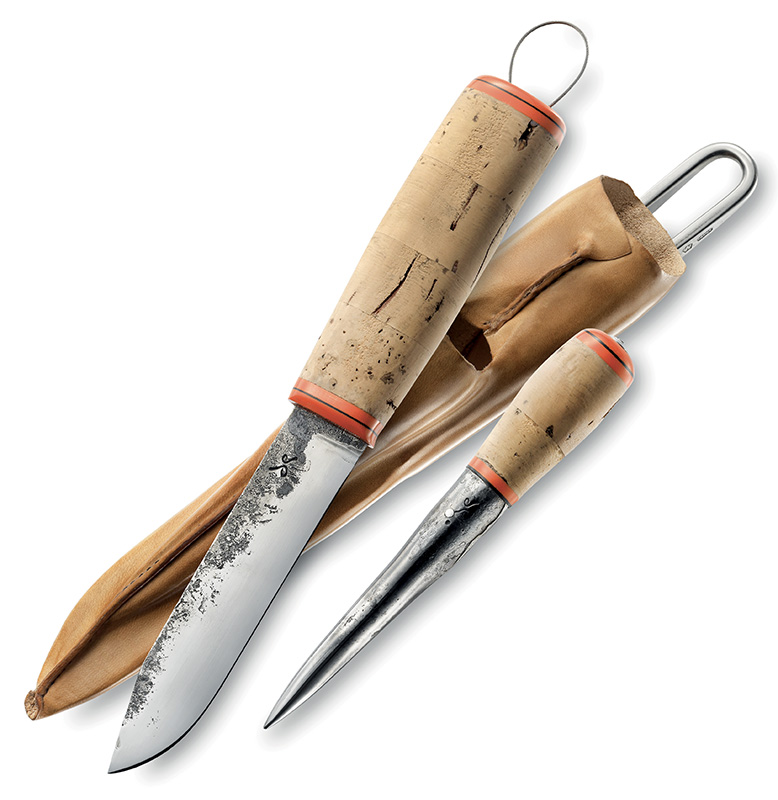
After a search spanning over twenty years, Massimo Poggi has created a unique collection that helps keep the memory of this essential tool alive: the knife.
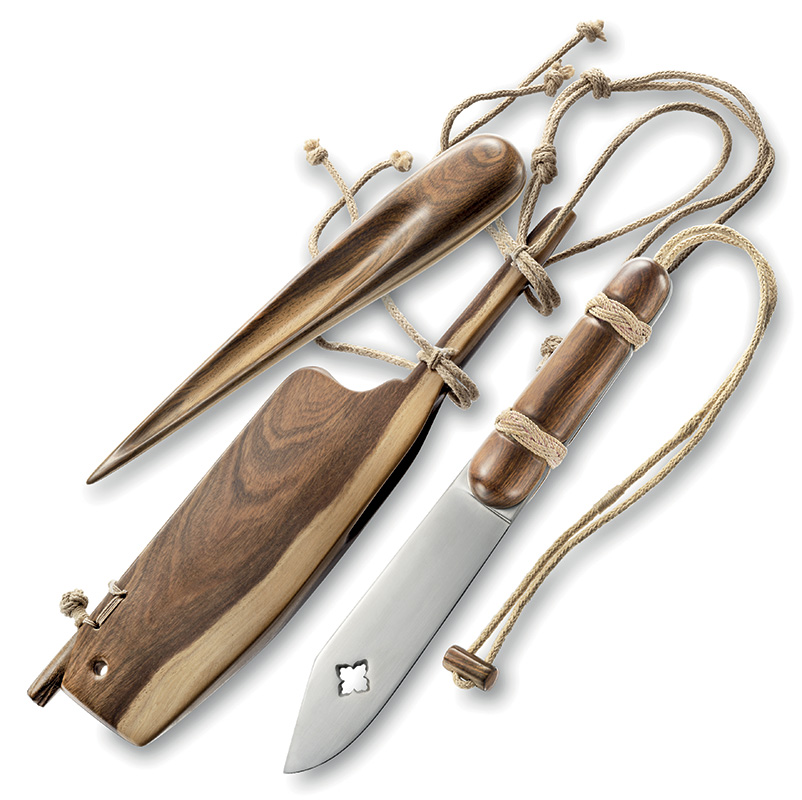
Massimo Poggi has a particular practical brilliance, which is perfectly reflected in the images of his book that portray many of the objects he realised with his own hands, over time, without haste, as it should be for true seafarers. In his youth, he had never made a knife, because he didn’t know how to work metal. He made his first attempt at the age of thirty. “I got the basic equipment and a suitable steel bar”, Poggi writes in his preface. “At the table, I planned and put the design of my interpretation of the mariner’s knife on paper: fixed blade, like the one that Batti jealously guarded in the stern box of the skiff. And my dream began to take shape. I then moved on to the execution: I obtained the teak from shipwright Viacava in Portofino and started shaping the handle, pins, and sheath. I received an adequately sized line, strictly made of hemp, to assemble everything, and I pierced my personal logo onto the blade. Polishing metal is no pleasant task. You can smell the acrid smell of the dust in every breath. But pleasure was in sight: after tempering, once it was finished and sharpened, I took the knife home and tried it on some dried and seasoned deer meat”. And, concluding, the skilled architect adds: “In that moment, I felt endless satisfaction”.
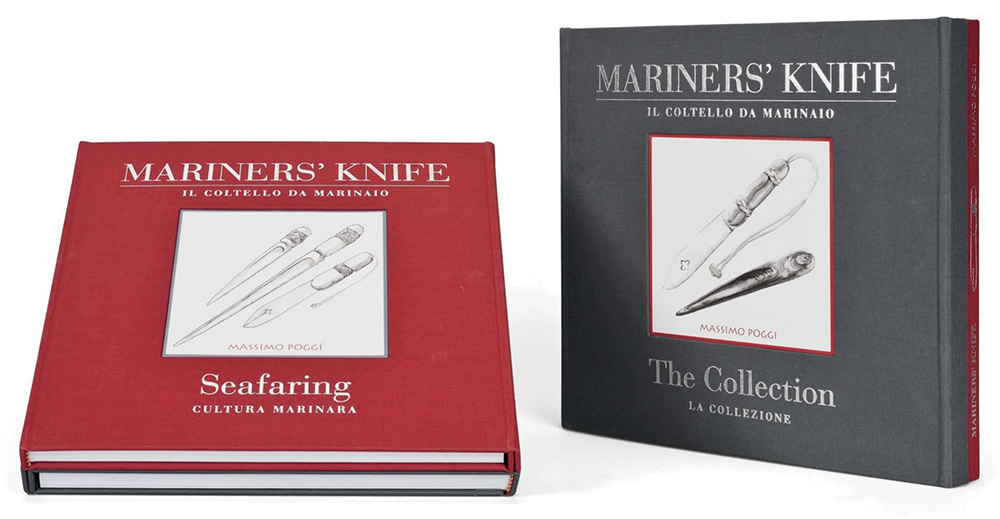
This book is half the story of a collection of mariners’ knives and half the autobiography of an enthusiast who tried his hand at realising objects from the past: the knife and the marlin spike.
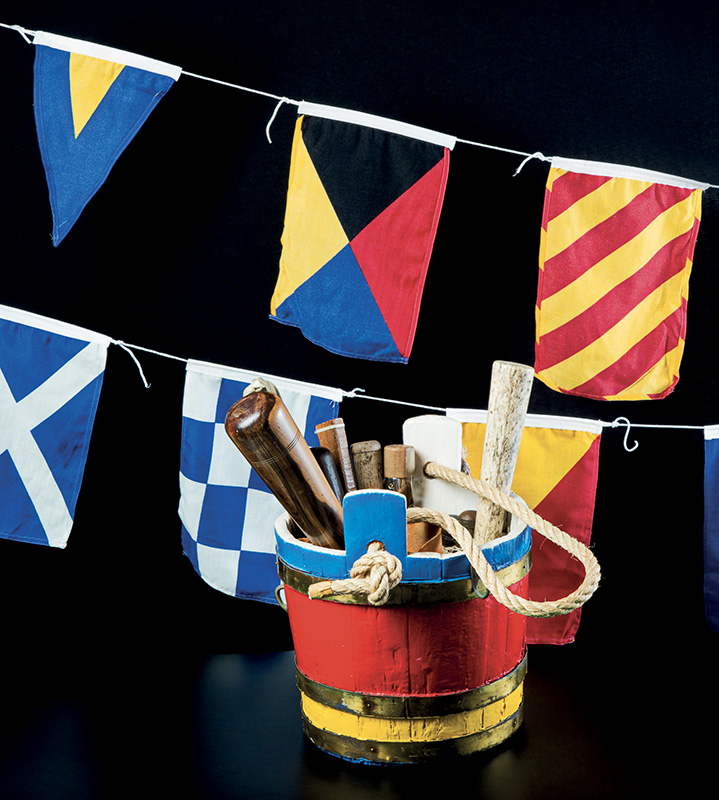
As you flip through the pages of the book, you can almost feel the wind between the rigging and the water lapping against the hull. And as you continue, you realise that to “quench his passion for everything related to the sea”, he went in search of ancient maritime objects, such as an old deck bucket, in teak, held together by some brass bands, which he casually found at one of the few remaining shipbreakers that still exist in La Spezia, and which he uses today to contain his vintage marlin spikes collection. And then comes the section dedicated to knives: “Tools”, as Poggi writes, “which, in context of great evolution, can retain their constant relevance throughout all ages”.
(Veteran Boat – Mariners’ Knife Seafaring, a life among the waves – Barchemagazine.com – Excerpted from Barche, November 2025)