From an artisan workshop founded by Piero Boffi in 1934 to a brand of excellence firmly established on the international design scene. Barche met with Roberto Gavazzi, who has been at the helm since 1989
by Chiara Risolo
On the occasion of the most recent edition of the Milano Design Week, Boffi blew out 90 candles. The Italian brand is internationally recognised as one of the leading players in the industry, renowned for the excellence of its high-end (or extremely high-end, to be honest) furniture for the home, outdoor living and luxury yachts. Barche had the pleasure of sitting down with Roberto Gavazzi, President and CEO of this jewel in the crown of Italian industry, a visionary entrepreneur who just last June received the Compasso d’Oro, one of the oldest and most prestigious awards dedicated to those who excel in the design industry.
At the helm of Boffi – now Boffi DePadova – since 1989, with a vision that has led him, among other things, to acquire highly prestigious brands over time – DePadova in 2015, MA/U Studio in 2017 and ADL in 2019 – Gavazzi has gradually and steadily led the company to the top of the world. A graduate in Economics from Bocconi University in Milan, followed by an MBA from Columbia University in New York, with his feet firmly on the ground and his eyes wide open, he has revealed, in a frank and effective narrative that has no need of sidesteps or digressions, the true soul of the Group, which can be summed up in a phrase that has become paradigmatic: a way of life. In fact, when you choose Boffi DePadova, you are not only choosing the unquestionable quality of the furniture, but above all a way of life.
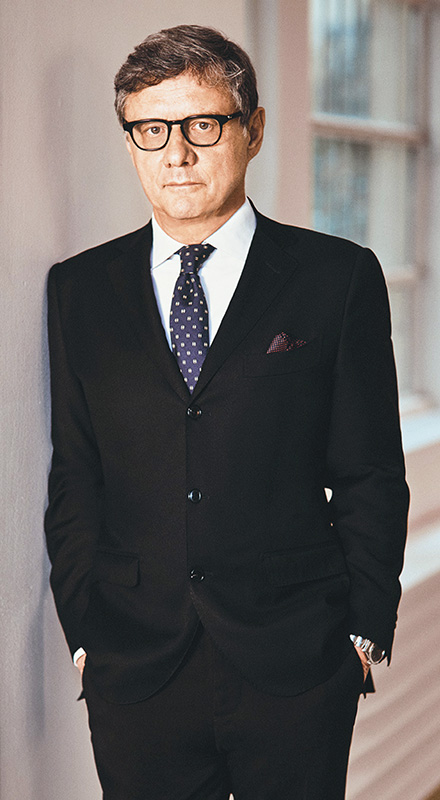
Roberto Gavazzi, photo by Stefano Galuzzi.
Boffi, beyond kitchens there’s more
Gavazzi, I would like to ask you a provocative question. When we talk about a company that has been around for a number of years, we usually say that it has “made history” in one way or another, depending on the industry in which it operates. Do you think this is always the case? It is a form of self-celebration that is sometimes necessary. But in some cases it is true.
Is Boffi a case in point? Without false modesty, I would say yes. Not only because it has been around for almost a century and has stood the test of time, but above all because it has been able to capture and produce the style that so many claim to be the ambassador of today: contemporary style

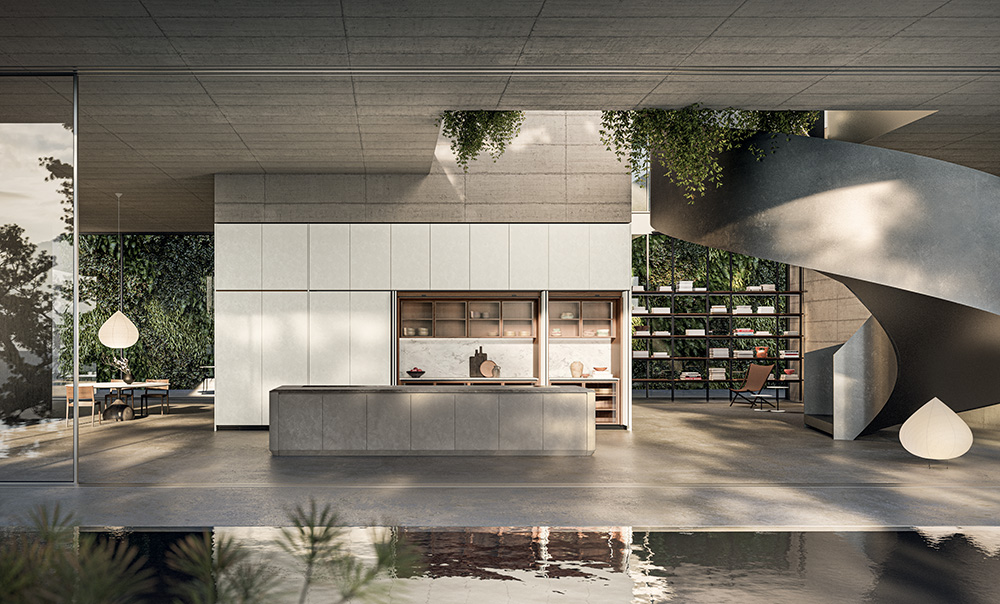
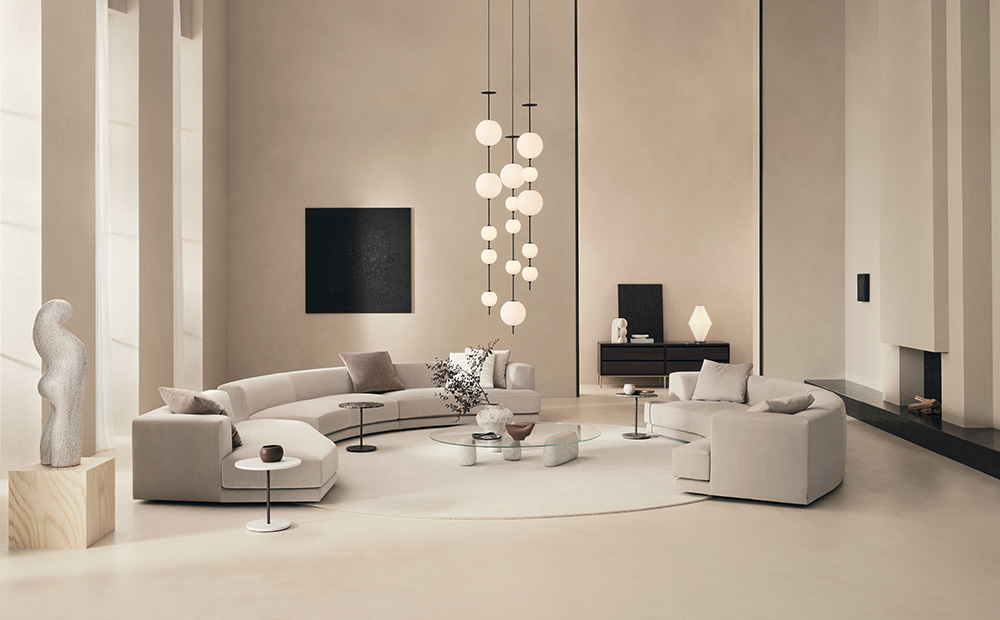
GAVAZZI’S VISION FOLLOWS IN THE FOOTSTEPS OF THE PIONEERS OF ITALIAN DESIGN. THEY BELIEVED THAT PRODUCT INNOVATION AND NEW STRATEGIES WERE NEEDED TO RESPOND TO CHANGES IN CUSTOMS AND MARKET SHIFTS.
Exactly. But how do you create a style from scratch before anyone else? With intuition and, no doubt, a good dose of entrepreneurial courage. You have to know how to look beyond the end of your nose. Always.
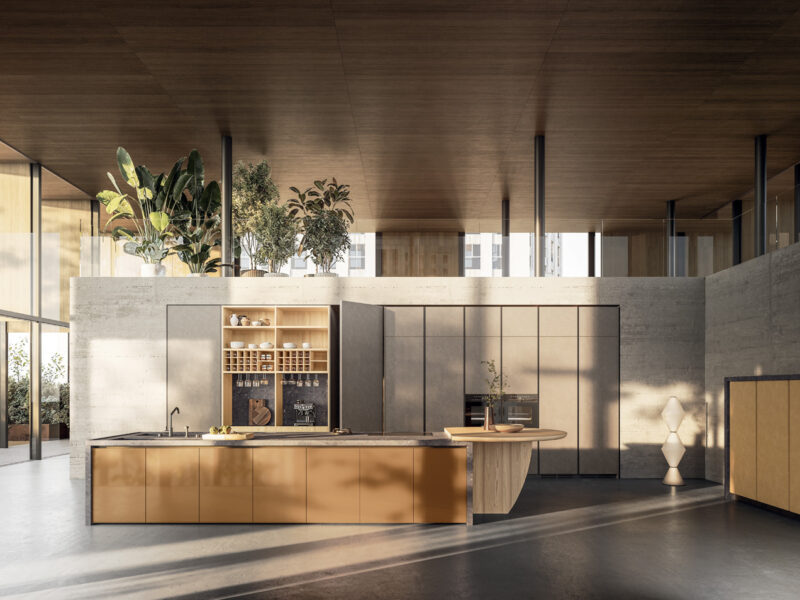
Could you give us a concrete example of this concept? The Grand Chef kitchen designed for Boffi in the 80s by the architect and designer Pepe Tanzi. Extremely functional, it featured an 11 cm steel worktop with integrated and welded sinks and a variable number of burners – it was a real revolution. It completely changed the way we thought about steel and how it could be used.
A revolution that was immediately copied by many other companies…
We have inaugurated a new season (he smiles).
In 1986, after the untimely death of Dino, Paolo bought all the shares in the company and hired a very young Piero Lissoni to be the art director. In 1989, Roberto Gavazzi joined the company. Together, the three of them, each with his own skills, were able to completely change the concept of the kitchen: from a place designed simply to prepare food, it became the beating heart of the home. Just think of Esprit in ’90 and Latina and Food Center in ’92.
Any other innovations? Sure. I dare say a lot of strategic innovations, not just product-related. With the acquisition of other brands since 2015, we were able to “leave” the kitchen. We also ventured into bathrooms and bedrooms. Today, Boffi can offer a complete home system.
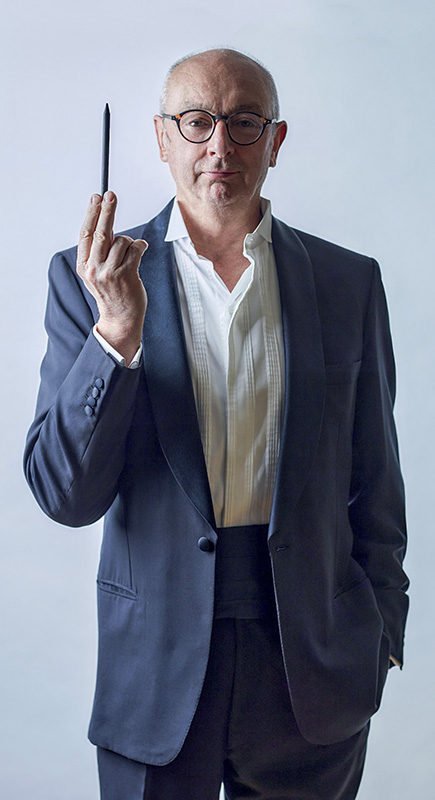
Piero Lissoni, photo by Veronica Gaido.
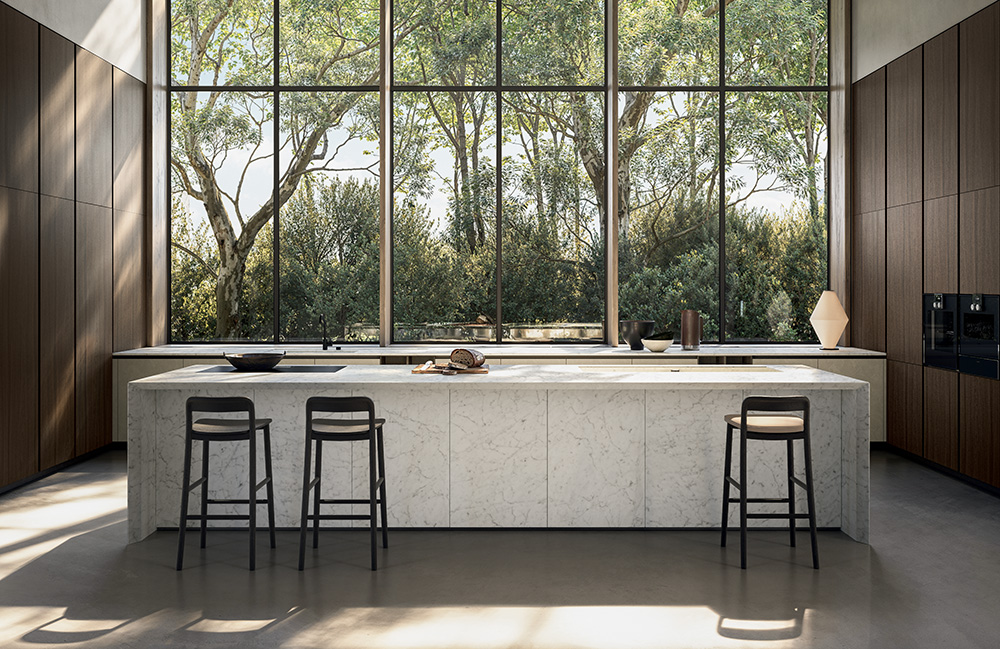
THE PARTNERSHIP BETWEEN BOFFI, GAVAZZI AND LISSONI GAVE LIFE TO THE ORIGINAL CONCEPT OF “ARCHITECTURES FOR FOOD PREPARATION AND CONVIVIALITY”. NOT JUST A PIECE OF FURNITURE, BUT A COLLECTION OF PRODUCTS THAT CAN BE “MIXED AND MATCHED”, OFFERING THE CUSTOMER A HIGH DEGREE OF PERSONALISATION.
For whom? Who are your customers? They are very demanding and extremely sophisticated people. They demand unique pieces, made-to-measure solutions, as special as a dress.
And their expectations are always met… It is a customer-focused company.
On the occasion of the Milan Design Week, you celebrated your first ninety years in business. Almost a century on the crest of the wave. However, is it too far-fetched to say that the real breakthrough – the one that put Boffi in the Olympus of international design – came in the 1980s, when Paolo Boffi had the intuition to call in Piero Lissoni and, shortly afterwards, himself? It was an excellent intuition. At the time, Lissoni was a rising star with an almost predictable future. As for me, I think Paolo recognised the right partner at the right time.
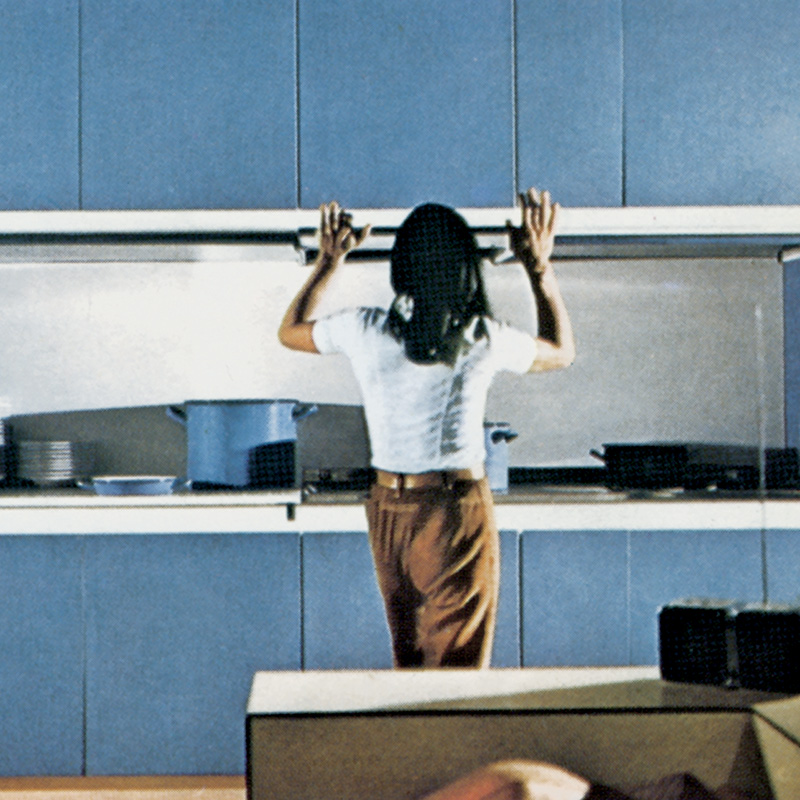
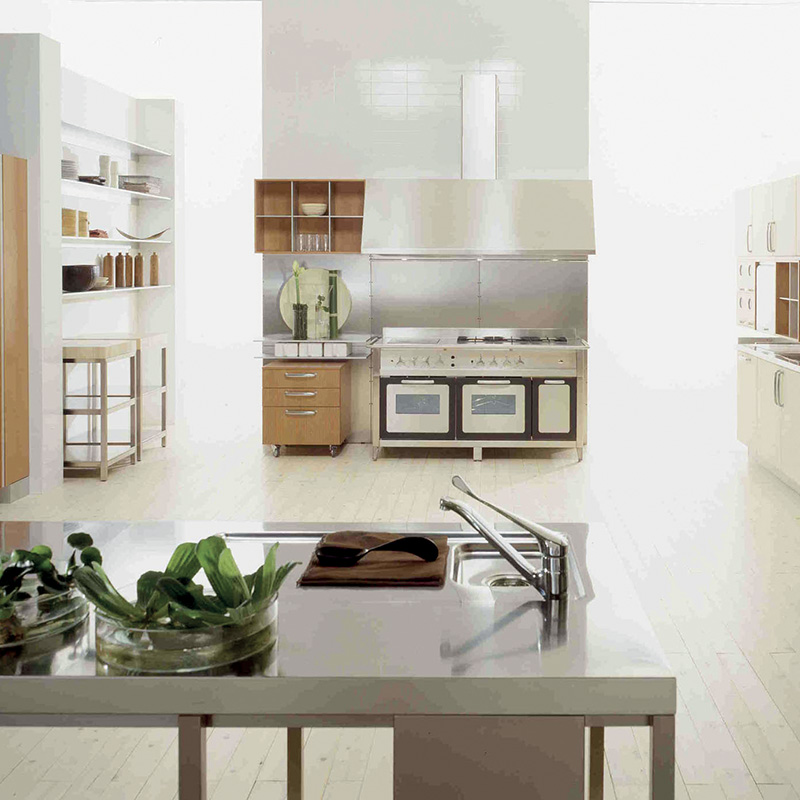
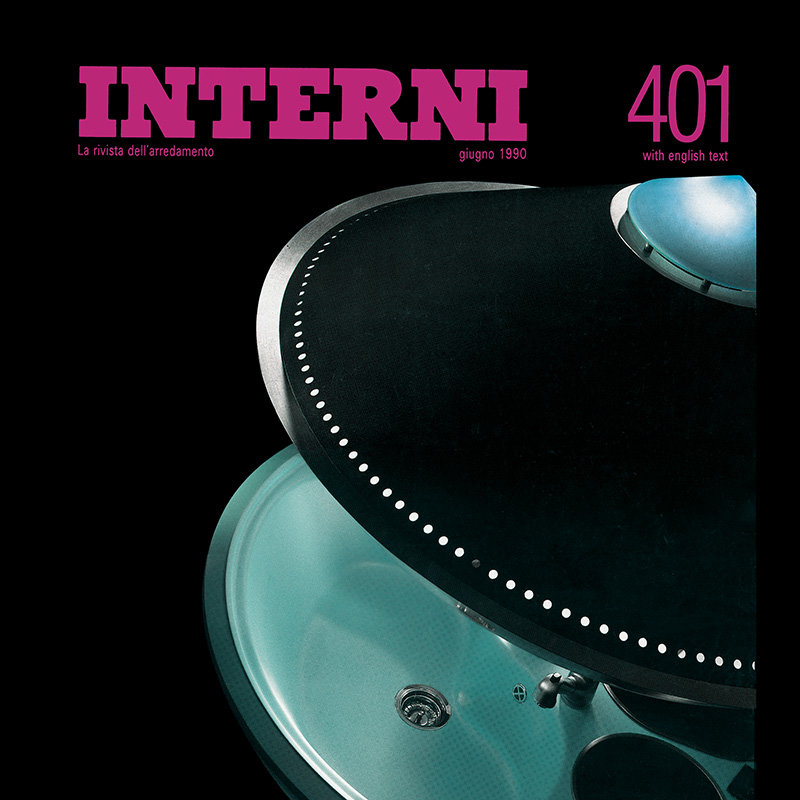
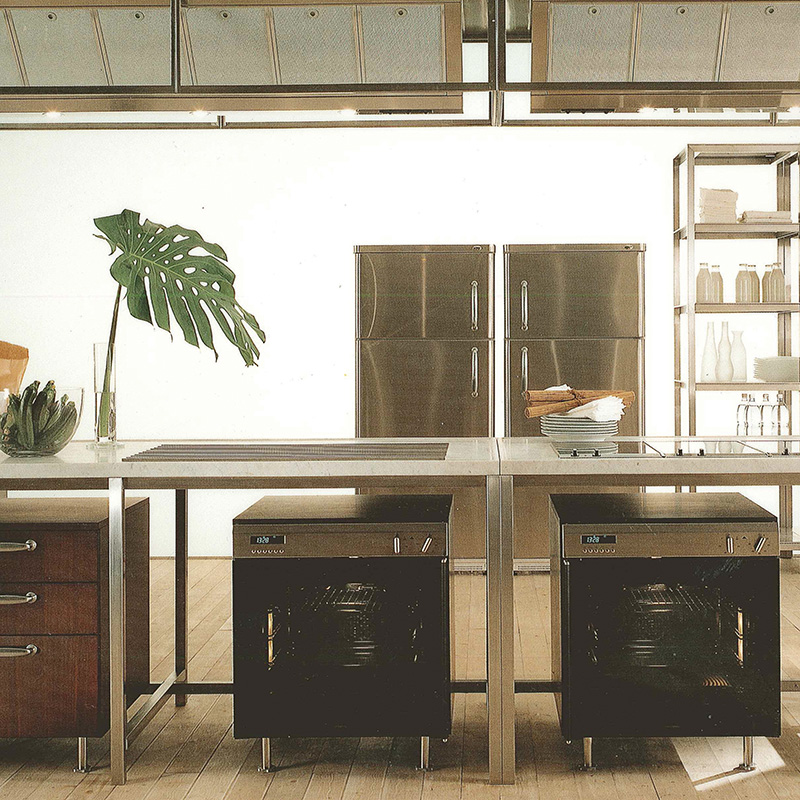
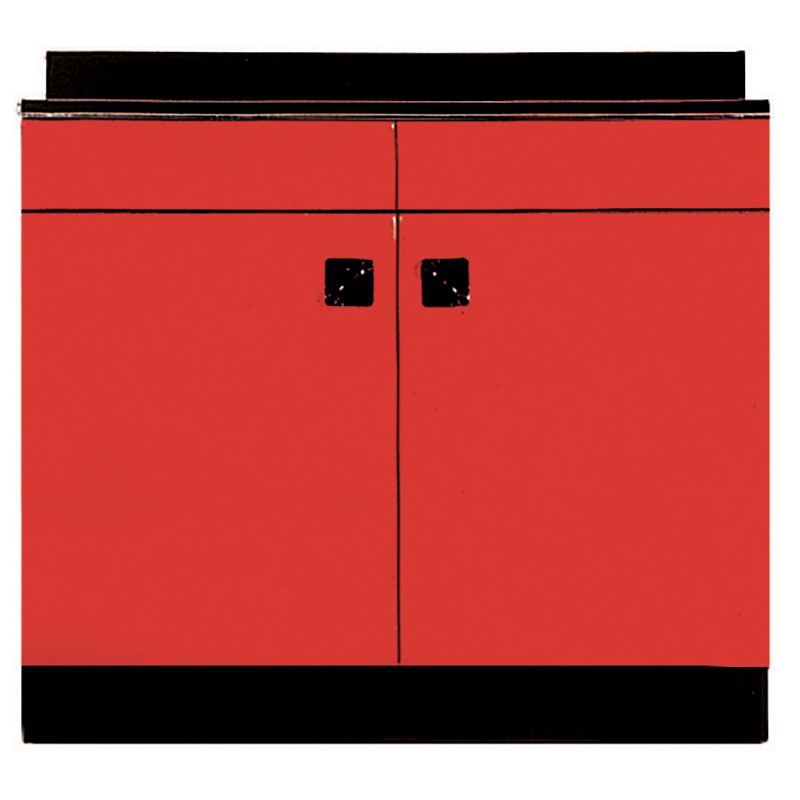
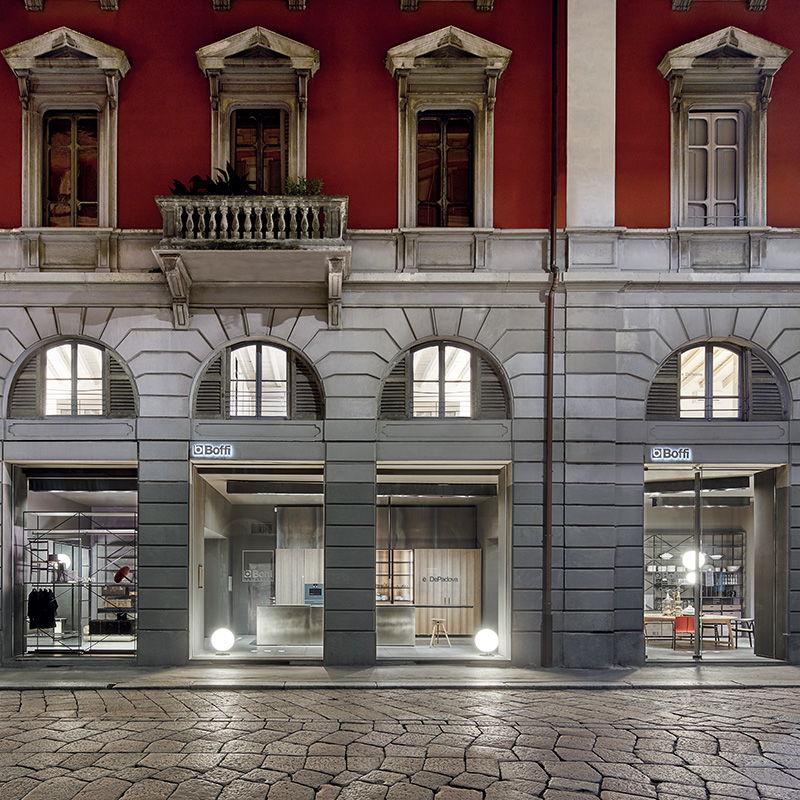
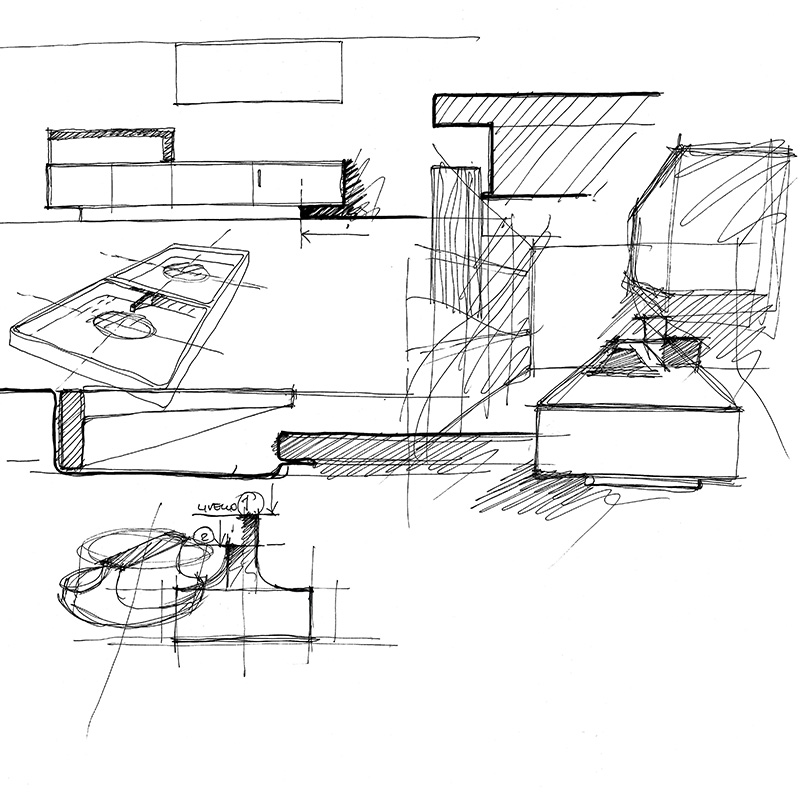
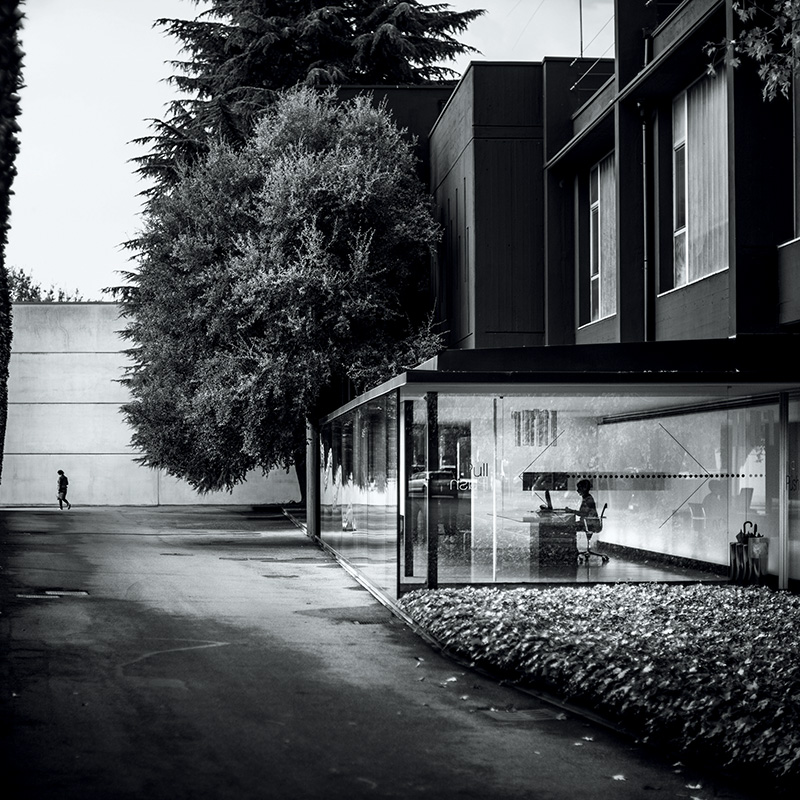
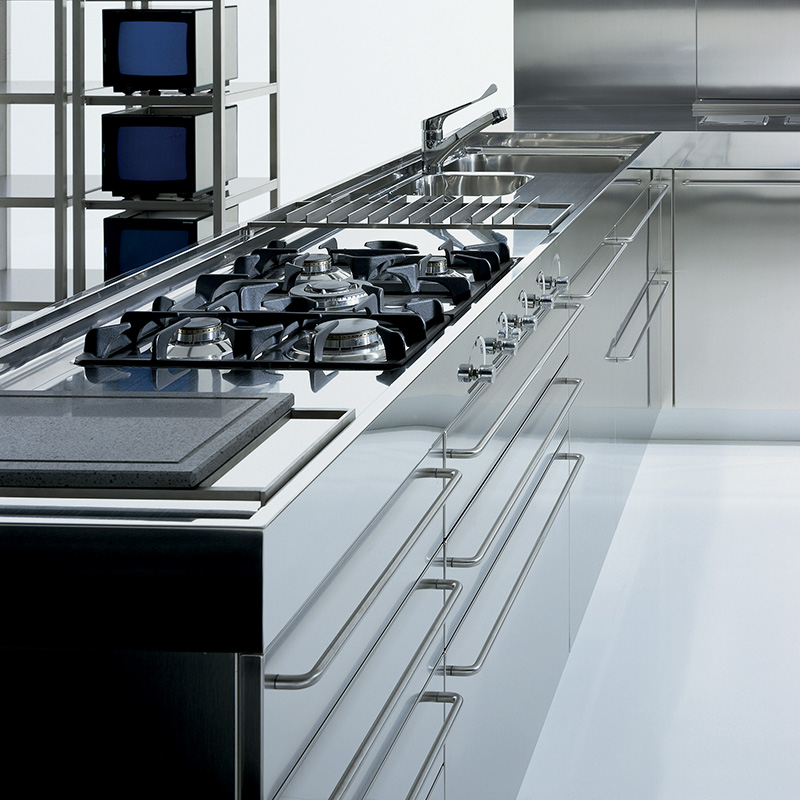
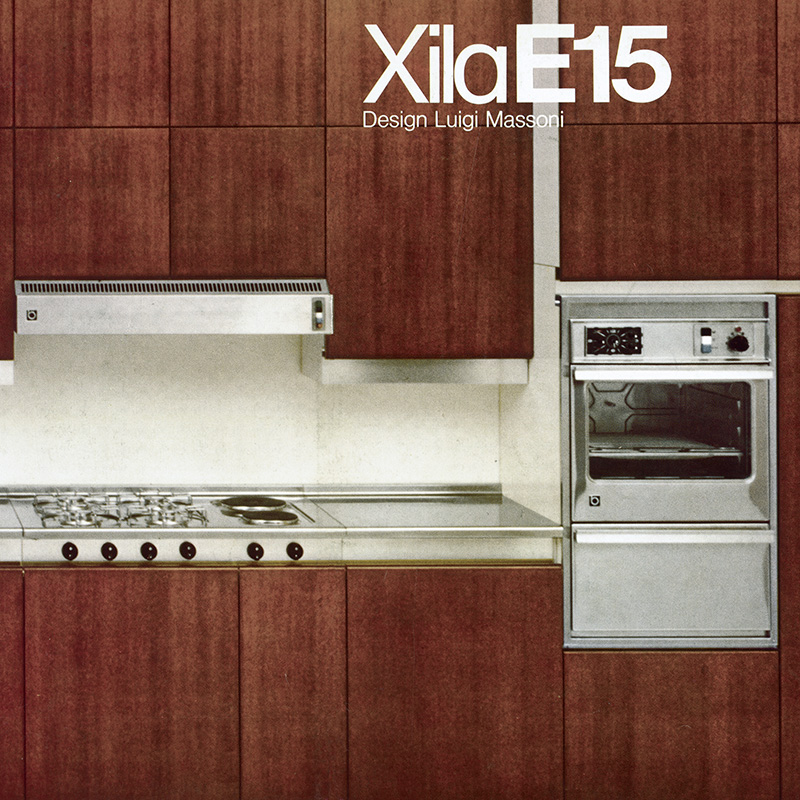
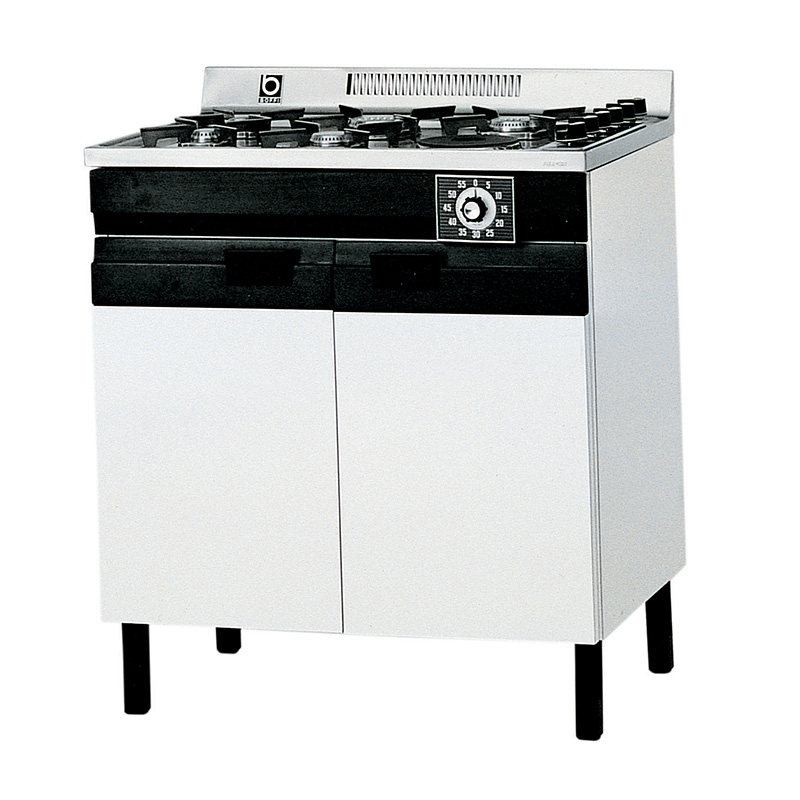
The story began in 1934, when Piero Boffi opened a workshop for the production of high quality furniture.His sons Paolo, Pier Ugo and Dino helped him to develop the brand. Dino, in particular, convinced the family to start a series of collaborations with some not-yet-famous but highly talented architects to design kitchens. Thus, in the 1960s, Boffi associated its name with signatures of the stature of Luigi Massoni, Sergio Asti, Joe Colombo, Antonio Citterio, Paolo Nava and Pepe Tanzi.
By the way, you had worked in very different industries up to that point. Why did you decide to enter the world of design? After several years as a manager, first at Saint-Gobain and then at Olivetti, I felt the need to test myself as an entrepreneur. At the time, the industries that offered the most opportunities to create something really exciting were fashion and design. I met Paolo and decided to go into design. There was plenty of room to do great things together.
“Things” that in the long run have earned the prestigious title of “way of life”? Could you explain what this means? For Boffi, an object cannot simply be beautiful or an end in itself. In addition to form and the quality of materials, it must have a function, but above all it must be in dialogue with everything else. That is why we talk about a way of living, more than just a kitchen, a wardrobe or a bathroom. People who come to us choose a way of living.
The year 2000 saw the creation of new synergies with renowned suppliers. For example, the German company Norbert Wangen, which helped to create the K2 and K14 kitchen blocks. Boffi had officially become the ultimate kitchen brand. But Gavazzi went even further and decided to focus on a new environment, the bathroom, which Piero Lissoni had defined as “the place of personal satisfaction”. The company became a crossroads for prestigious and increasingly international collaborations: from Marcel Wanders to Naoto Fukasawa, from Nendo to Palomba Serafini Associati. At the beginning of the next decade, Boffi began collaborating with Fantini, a manufacturer of taps and mixers, and launched the Aboutwater Boffi Fantini line.
You mentioned two magic words, “beauty” and “style”. Let’s start with the first one. When can you define a piece of furniture as beautiful? When it is in balance with everything around it. What makes the difference is the durability of this or that piece and its consistency with the whole project.
What about style? What is Boffi’s style? Style is what a brand represents, what makes it recognisable to the public. In the specific case of Boffi, I would certainly say timeless elegance, in which the personalisation, refinement and project consistency I mentioned earlier play a very important role. These are the essential foundations on which to build.
2015 was a very important year. To continue its exponential growth, Gavazzi acquired another heavyweight of Italian design, the De Padova brand, founded by Maddalena De Padova. But that was not all. In 2017, the entrepreneur acquired Ma/U Studio, a Danish company specialising in tables, shelving systems and light bookcases. Two years later, in 2019, Boffi acquired Massimo Luca’s ADL, a spearhead in opening and closing systems such as doors, screens and flexible walls. The die was cast and the “Home System”, the famous way of living, began to take shape. And what a beautiful shape.
Are these the foundations that Boffi takes into account even when it leaves the sphere of the home to go on board magnificent yachts? Of course, and even more so if possible. When we design kitchens or furniture for yachts, we have to take into account many variables that have a different weight on land: first of all movement, then limited space, materials, resistance… We even have specialists who work specifically in this area.
Do owners ever ask you to also furnish their homes? Very often. Yachting is a strategic universe and I must stress that both the architect Piero Lissoni and the Sanlorenzo shipyards, with whom we work, are excellent calling cards in this respect.
(Boffi – We are history – Barchemagazine.com – September 2024)