Doppio misto
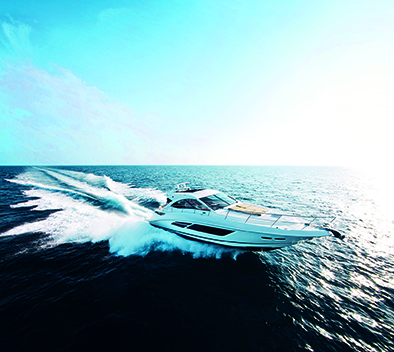
Comfort americano e design d’interni italiano. Con due Cummins di 530 cavalli ciascuno naviga alla velocità massima di 30 nodi
LA DIFFERENZA C’È E SI VEDE. Gli interni sono stati disegnati da Christian Grande che ha potuto lasciare la sua impronta e modificare il layout che solitamente viene progettato dal cantiere americano. Non è solo una questione di stile o di design. Il lavoro di Christian Grande ha reso tutto più funzionale e gradevole alla vista. Quali sono le scelte che ci sono piaciute particolarmente? Lo spazio sottocoperta ha, oltre alle cabine della zona notte, uno spazio living e cucina. È uno spazio molto arioso con tanta altezza e molta luce naturale, nonostante si tratti del ponte inferiore della barca. Ottima la sensazione data dalle finestrature laterali, alcune delle quali sono a pelo d’acqua. Questo contribuisce anche a far credere di essere in un ambiente più ampio. Tutti gli spazi interni sono stati ottimizzati. I volumi sono abbondanti, nelle aree living così come nelle cabine, perfino in quella di poppa che si trova sotto la dinette. Nella filosofia dell’ottimizzazione dello spazio disponibile vanno annoverate due soluzioni davvero azzeccate come il lavabo all’esterno del locale bagno che consente di dedicare quest’ultimo al wc e alla doccia e il comando elettrico per spostare il letto nella cabina di prua che permette di “accorciare” il letto, trasformandolo, di fatto, in una chaise long, ideale durante il giorno. Di notte, invece, con lo stesso comando si può abbassare il letto in posizione orizzontale, occupando un po’ più di spazio in cabina a vantaggio di una cuccetta matrimoniale più ampia di un letto alla francese. L’animo più “made in USA” degli interni si nota invece nelle dimensioni della cucina e del frigorifero. La contaminazione comunque fornisce un risultato più che apprezzabile tra cura nel design tipicamente italiano e comfort extralarge tipicamente da diportista americano. In coperta non c’è il fly così le linee e la sovrastruttura rimangono meno appesantite. Quello che non ci ha convinto di questa zona è il passavanti laterale per accedere a prua. Ce n’è uno solo, a dritta, e misura solamente 16 centimetri. A sinistra invece lo schienale del divanetto nel pozzetto ne impedisce l’accesso. Il problema è che 16 cm sono davvero pochi. Infatti nel caso di ormeggio alla fonda in rada con un po’ di risacca, per andare a prua vi dovrete arrampicare tra la battagliola e il tientibene che corre sull’hard top. I motori sono due da 550 cavalli, con trasmissione Zeus. Con questi piedi, il pacchetto prevede anche joystick di manovra e skyhook, funzione che consente di rimanere fermi in un punto. È interfacciata con il Gps e muove automaticamente un motore o l’altro per evitare che la barca scarrocci. È molto utile in porto se si deve attendere il proprio turno per fare rifornimento e noi infatti l’abbiamo testato proprio così. Una volta riempita la pancia di gasolio, mettiamo la prua verso l’uscita del porto di Mandelieu. Il mare è abbastanza calmo e si può affondare la manetta senza problemi. Oltre alle piccole onde provocate dal vento, incrociamo un po’ di scie delle barche in transito. La carena si comporta bene, ha un giusto equilibrio tra capacità di fendere e saltare l’onda. La barca è molto maneggevole, perfino troppo. In virata stretta per fare un giro su noi stessi, disegniamo un cerchio con un diametro di circa 60 metri. È merito o colpa della trasmissione Zeus che, a differenza di altri piedi azimutali, non ha un’autolimitazione della virata. La barca risulta pertanto molto agile, ma si deve fare attenzione a non esagerare nello stringere la virata. Per il resto la navigazione è confortevole e molto semplice. C’è anche un sistema di trim tab integrati e automatici. Il beneficio si vede quando si esce dalla virata perché lo scafo recupera l’assetto corretto in pochissimi secondi. Per chi lo desidera, comunque, il tutto può essere comandato manualmente. La potenza è quella giusta. Alla massima abbiamo superato i 30 nodi e per planare ne bastano 17. Ci sono 13 nodi di range per scegliere l’andatura di crociera desiderata. A 20 nodi di velocità i consumi per entrambi i motori sono di 150 litri/ora e a 25 di poco inferiori ai 200. I due propulsori non bevono molto, nemmeno alla massima velocità. Questo significa che si può navigare senza pensieri. Proprio quello che si desidera in crociera.
Mixed doubles
American comfort and Italian interior design. With twin Cummins engines of 530 hp each it reaches the top speed of 30 knots
THERE IS A DIFFERENCE, AND YOU CAN SEE IT. The interiors have been designed by Christian Grande, who has managed to leave his mark and modify the layout that nearly always gets planned by the American boatyard. It isn’t just a question of style or design. Christian Grande’s work has made everything more functional, and better looking. Which of his choices did we especially like? As well as the sleeping area, there is also a living space and galley in the below decks area. It is a very airy space with a lot of height and a lot of natural light, despite being on the lower deck of the boat. The feeling from the side windows is excellent, and some of them are at water level. That also helps to make you think you are in a larger area. The best has been made of all the interior spaces. The volumes are considerable, both in the living area and the cabins, even in the stern cabin which is below the small dining room. As part of this search to get the best out of the area available, there are two things that have been done just right: the wash basin outside the bathroom, which means it can be used for the toilet and shower, and the electronic control which moves and shortens the bed in the front cabin, effectively turning it into a chaise longue, which is perfect for the daytime. But at night the same control lowers the bed to a horizontal position, so that it takes up a bit more cabin space and creates a double berth which is larger than a French bed. The more US-made feel of the interiors, however, can be felt in the size of the galley and the fridge. But the hybrid influence nevertheless provides a very distinctive outcome, with the typically Italian attention to design and the extra-large comforts which are characteristic of American pleasure craft. Above decks, there is no flybridge, and so the lines and superstructure are less heavy. But what didn’t convince us about that area is the gangway to reach the prow. There is only one of them, to starboard, and it is only 16 centimetres wide. On the left the back of the cockpit sofa means it can’t be reached. The problem is that 16 cm is really not very much. Indeed, if you were moored at anchor, out of port and there was a bit of swell, you would have to clamber around over the side rails and grab-bars that go along the hard top just to get to the bows. There are two 550hp engines, with Zeus transmission. With these thrusters the package also includes a manoeuvring joystick and skyhook, which means you can stay in the same place. It is linked to a GPS and automatically uses one engine or the other to stop the boat falling leeward. It is very useful in harbour if you have to wait your turn to fill up and that was exactly how we tested it. Once the diesel tank was full, we turned towards the mouth of Mandelieu harbour. The sea is fairly calm, and we can turn the gas right up without any problem. As well as a few small waves caused by the wind, we come across as few wakes left by nearby boats. The hull handles well, and finds the right balance between ploughing through and jumping over the waves. The boat is very manoeuvrable, almost too much so. We go into a tight bend to turn around on ourselves, and we carve out a circle with a diameter of 60 metres. That is to be credited, or blamed, to the Zeus transmission which – in contrast to other azimuth thrusting systems – does not automatically limit turning circles. And so the boat turns out to be very agile, but you have to be careful not to push the turns too hard. Elsewhere, sailing is comfortable and very simple. There is also an integrated and automatic trim tab system. The advantage can be seen when you come out of a turn because the boat recovers its balance in just a few seconds. But for those who want to, the whole boat can be controlled manually. The power available is exactly what is needed. At full power we went over 30 knots, and to plane 17 knots were enough. You can choose a cruising speed over a range of 13 knots. At 20 knots the two engines consumed 150 litres/hour and at 25 knots just below 200. The two engines don’t consume a lot, not even at top speed. That means sailing without worries. Just what you want when cruising.
(Settembre 2016)